|
Philology: scientific researches
Reference:
Riashenkova, A.A. (2025). An analysis of the speech portrait of a teacher (using data from an Internet blog). Philology: scientific researches, 12, 89–102. https://doi.org/10.7256/2454-0749.2025.12.75886
An analysis of the speech portrait of a teacher (using data from an Internet blog)
Riashenkova Aleksandra Aleksandrovna
Lecturer; Department of Foreign Languages; Ural State University of Economics
45 Narodnaya Volya str., office 519, Yekaterinburg, Sverdlovsk Region, 620144, Russia

|
ryashenckova@yandex.ru
|
|
 |
Other publications by this author
|
|
|
DOI: 10.7256/2454-0749.2025.12.75886
EDN:
QUTNMI
Received:
09/14/2025
Published:
12/23/2025
Abstract: The subject of this study is the speech portrait of a modern Chinese teacher presented in the format of a video blog. The analysis focuses on the lexical, syntactic, and pragmatic features of the blogger’s speech, as well as on identifying the strategies through which the teacher constructs his or her self-image in the digital space. The research examines the interaction between the speaker’s personal and professional characteristics as reflected in their speech behavior, including the use of expressive and colloquial means, rhetorical questions, modal particles, and elements of everyday and youth discourse. The teacher’s speech practices are considered not only as a reflection of an individual communication style but also as a significant phenomenon in the context of the transformation of the teaching profession under the influence of mass culture, the Internet environment, and the digitalization of education. The methodological basis of the research combines the inductive–deductive approach and the descriptive method, with component analysis serving as the principal analytical tool. The main findings indicate that the speech portrait of the teacher-blogger is characterized by dynamism, emotional richness, audience engagement, and self-image formation. The use of short syntactic constructions, colloquial and youth vocabulary, slang expressions, and expressive means contributes to creating a sense of sincerity and closeness. The inclusion of everyday details and the open expression of personal experiences help break down the distance between the teacher and the audience, shaping the image of the educator not only as a knowledge bearer but also as a person who shares the values and realities of their viewers. Thus, the study confirms that the digital environment transforms pedagogical discourse, turning it into an instrument for building trust-based relationships and fostering humanistically oriented educational communication.
Keywords:
linguopersonology, speech portrait, portraiture, speech portraiture, social media, media, Chinese language, China, blog, teacher
This article is automatically translated.
Education has always played a key role in Chinese society as a means of social mobility and cultural development. Thus, the imperial Keju examination system in China provided access to government positions not only for representatives of noble and wealthy families, but also for capable graduates, which contributed to the formation of a meritocratic principle in the government of the country [17, p. 37]. Modern realities are making significant adjustments to the perception of the teaching profession. Cultural traditions and historical attitudes, in particular Confucian ideas about the high social importance and moral authority of teachers, have undergone changes under the influence of economic development and the digital environment [3, p. 83]. Thus, the high pace of life in the scientific and teaching fields leads to a loss of a sense of belonging, the interaction of teachers with students is reduced to formal and impersonal, academic activity is shifting away from the idea of "service to science as a vocation" It refers to "academic work as a means of survival", and the lack of free time creates anxiety due to the feeling of lack of time. As a result, the image of a teacher moves from "知识分子子" ("educated people", "intelligentsia") to the image of "学术人人" ("researchers"), focused primarily on the fulfillment of measurable indicators. [21]. The transformation of the value system is largely determined by the influence of mass culture transmitted through the media and the digital space. The basis of mass culture is a hedonistic orientation focused on the cultivation of pleasure and entertainment [1, p. 36]. At the same time, it should be borne in mind that the very concept of "mass culture" in the Chinese context has a special specificity: traditionally it encompassed all social strata and had a broader meaning than its Western counterpart. However, in modern research by Chinese cultural scientists, it is emphasized that this concept is gradually approaching the Western interpretation, acquiring its characteristic features – commercialization, orientation towards the entertainment industry, simplification of content and pronounced secularization [16, p. 10]. It is worth noting that in the conditions of Chinese socio-cultural reality, the processes of cultural transformation are considered not as a side phenomenon, but as a fundamental mechanism that ensures significant changes in society [3, p. 214]. It is known that language is a carrier of the collective experience of a certain human society. It performs a much more complex function than just a means of communication: language serves as a mechanism through which society accumulates, preserves and transmits knowledge, traditions, values and forms of thinking that have developed in the course of historical development. The language captures the people's ideas about the world, their cultural memory and the peculiarities of their worldview. S.G. Ter-Minasova argues that language is a powerful social tool that forms ethnic and national identity through the preservation and transmission of cultural meanings and traditions. Thus, language not only reflects changes in society, but also influences their character itself, acting as an active participant in the cultural and historical process [14, p. 18]. V. von Humboldt, describing the concept of the "linguistic picture of the world", explained that language structures human perception of reality and forms a special vision of the world, characteristic of for every nation. The linguistic picture of the world is a set of knowledge recorded in a language, as well as ways to comprehend and interpret them. It reflects the national and cultural specifics determined by the historical experience, mentality and way of life of the people [11, p. 26]. In addition, different languages have different ways of understanding reality, and therefore each language can be considered as a unique model of the world and a carrier of the collective consciousness of its people [18, p. 35]. The purpose of our research is to identify the speech characteristics of a modern Chinese teacher. The research material was a video clip made publicly available on the Douyin platform [19]. In the course of the research, the inductive-deductive method, the descriptive method, and the component analysis of the blogger's speech were used. The study of the relationship between speech behavior and personal characteristics of a person (his psychotype, professional traits) is associated with the anthropocentric trend in linguistics. For the first time, the question of "linguistic personality" was addressed by V. V. Vinogradov, who, analyzing the speech of artistic characters, raises the question of the relationship between the image of the author, the artistic image and the linguistic personality. In his work On Fiction, he notes that "the social is sought in the personal through the disclosure of all the structural shells of the linguistic personality" [2, p. 63]. Later, Karaulov Yu. N. in the monograph "The Russian language and linguistic personality", the concept of "linguistic personality" refers to "a personality expressed in language (texts) and through language", and notes that this "is a personality reconstructed in its basic features on the basis of linguistic means" [5, p. 38]. Further in the work, he clarifies the concept, adding that a "linguistic personality" is "a set (and the result of the realization) of abilities to create and perceive speech works (texts), differing in a) the degree of structural and linguistic complexity, b) the depth of accuracy of reality reflection, and c) a certain target orientation" [5, p. 245]. Despite the fact that the issues of speech portrait and linguistic personality are poorly developed in Chinese linguistics, we consider it necessary to mention some scientists. Thus, he reviewed the theoretical approaches to the concept of "linguistic personality", describing in detail the level model previously proposed by Yu. N. Karaulov, and analyzing its potential for subsequent linguistic research [23]. In turn, he focused on the consideration of the national linguistic personality and the linguistic personality as a whole [20]. The researcher of the Russian national linguistic personality has identified the peculiarities of the Russian national linguistic personality based on folk tales [22]. Jiang Zhiyan carried out a comprehensive comparative study of Russian and Chinese linguistic culture, analyzing artistic characters as carriers of culturally labeled language models [15]. As part of the analysis, he drew on a wide range of linguistic means (lexical units, stable expressions and phraseological units), revealing similarities and differences in value orientations.
Russian Russian literary pronunciation The concept of "speech portrait" was introduced into scientific use by M. V. Panov in his fundamental work "The History of Russian literary Pronunciation of the XVIII–XX centuries", where the researcher traced the evolution of the phonetic system of the Russian language and presented the phonetic characteristics of a number of prominent figures [10]. Later, the term was developed in linguistics and acquired various interpretations. For example, S. V. Leorda interprets a speech portrait as an expression of a linguistic personality embodied in the speech activity of a certain social group [7, p. 6]. In turn, T. P. Tarasenko considers it as a set of linguistic and speech features characterizing a communicative personality or social community in a specific historical period [13, p. 8]. Matveeva believes that the basis for creating speech portraits is "human speech habits that have sunk into the depths of consciousness" [9, p. 5]. A speech portrait in modern linguistics is considered as a specific set of linguistic and communicative characteristics reflecting the individual and professional characteristics of a politician's linguistic personality. The speech portrait acts as a tool for scientific image reconstruction, identification of ideological and value dominants and strategies for influencing the audience, and also serves as a means of shaping public perception. Researchers distinguish different types of speech portraits, differentiated on a number of grounds: subject (on behalf of the author), genre (memoirs, journalistic portraits, interviews and memoirs), subject level, if we are talking about portraits of politicians (federal and regional portraits), as well as the degree of detail (expanded and small portraits). In addition, it can be classified according to the form of presentation, including both verbal (poetic, prose) and non-verbal variants. [8, p. 84]. Speech learning can also take place within social groups. Kozyrev V. A. analyzed the speech portrait of a modern teacher as the most important component of his professional culture and social image in the educational space [6]. The scientist considered the teacher's speech not only as a tool for transferring knowledge, but also as a key indicator of the level of general culture, professional competence and authority of the teacher. The author notes that under the conditions of language change, the normality of speech decreases, which is manifested in the use of jargonisms, vernaculars, following speech fashion and weakening orthoepical, lexical and stylistic norms, especially noticeable in the pedagogical environment. The study of the speech portrait of a modern student was carried out by S. V. Leorda, who noted the active use of slang and reduced vocabulary, experimentation with foreign language elements, the widespread use of language games and precedent phenomena, mainly borrowed from the sphere of mass culture [7]. S. V. Popova also worked within the framework of pedagogical discourse, her work is devoted to the analysis of the linguistic and cultural type of the image of a "school teacher" in the Russian linguistic picture of the world [12]. Within the framework of the theory of linguistic and cultural types, the author reconstructs the speech portrait of this socio-professional image based on the analysis of literary texts, film discourse, journalistic sources and speech data of informants of different age and social groups. Popova S. V., as well as Kozyrev V. A., draws attention to deviations from the literary norm and communicative failures in the teacher's real speech practice, in contrast to the ideal image. Let's turn to the analysis of the speech portrait of a modern teacher in Chinese linguoculture. First, let's give a brief description of the analyzed teacher-blogger. A blogger teacher, she received a bachelor's degree from Hubei University, then completed her master's degree at the People's University of China. After getting married and having a child, she continued her studies at Peking University in graduate school. The author's spouse is a graduate student at Tsinghua University. The author declares his intention to share knowledge and positivity, and also encourages you to subscribe to updates in order to develop together in the future. The author's blog is dedicated to her personal and professional life. Using the programs Cathoven and Text Analyzer, we analyzed the lexical composition of the text. According to the results, the text roughly corresponds to the HSK level of 4, which corresponds to the level of B1 on the CEFR scale.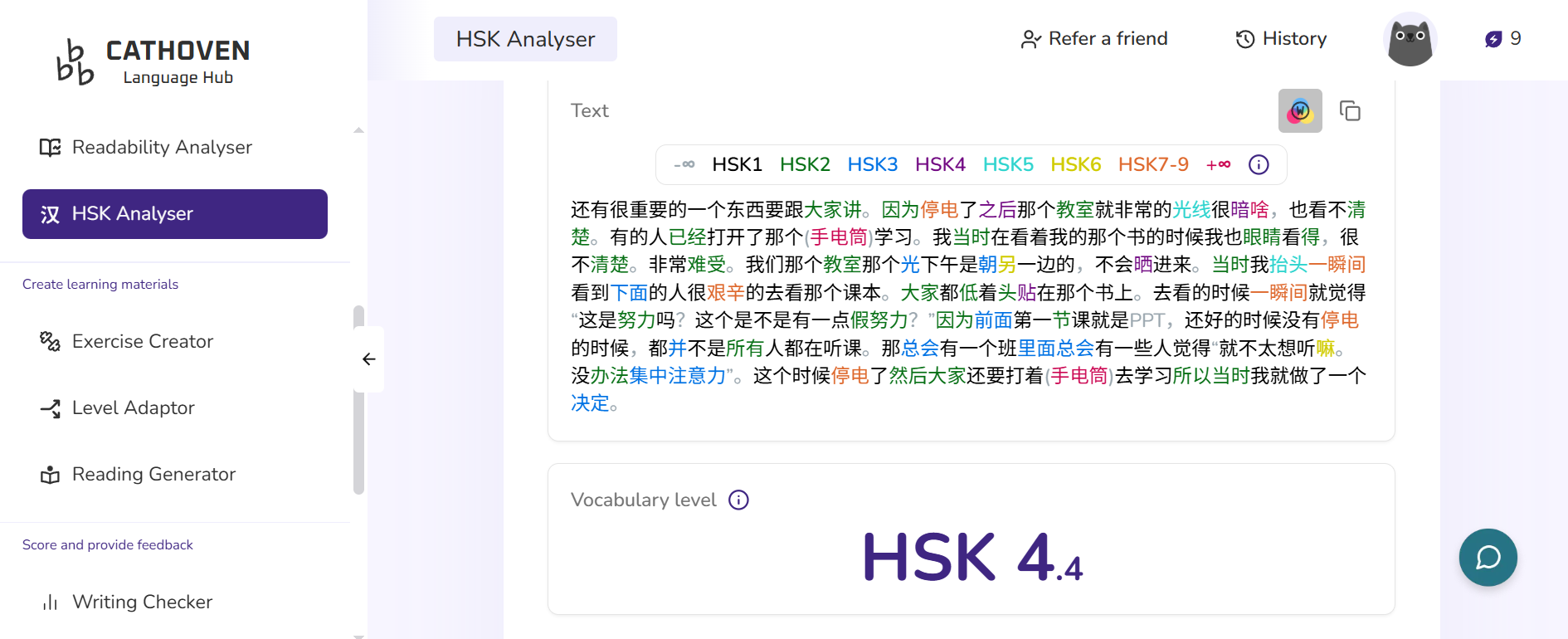 Fig. 1. The result of text analysis at the HSK level. Based on the analysis of the lexical composition, a map of the frequency of vocabulary use in the text was formed. 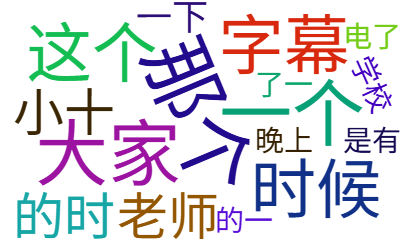
Fig. 2. Visualization of the most used vocabulary in the text. The presented frequency map demonstrates the dominance of the high-frequency colloquial vocabulary of modern Chinese: the official words 那个, 这个, 一, the pronoun, the words corresponding to the topic of the video, 时, 老师 are used. The visually noticeable concentration of such words indicates the narrative, everyday nature of the text and a high degree of conversational redundancy. Grammatical analysis shows that the syntactic organization of the text is subordinated to the task of creating the effect of maximum engagement and sincerity. The first thing worth noting is the widespread use of short and often incomplete sentences, ellipses, and nominative constructions expressed in the form of inscriptions on the screen. "去学学" ("Going to school").
"到学学" ("I got to school"). "Thankfully, my classes are at 10 o'clock." (If [classes started] at the beginning of the eighth, it would be too late.) "老师也不愿意赶早八" ("Teachers also don't agree to start at 8 a.m."). "去食堂买个早餐" ("I'm going to the cafeteria to buy breakfast"). "等电电" ("Waiting for the elevator"). "到办公公~" ("I got to the staff room~"). "开"" ("Turned on the light"). "吃个早餐" ("I'm eating breakfast"). Short statements create the effect of "notes on the run", imitate an internal monologue and show a consistent chronicle of the events of the day, contributing to the dynamics of the narrative and a sense of lively communication. The subject is often omitted, because it is obvious from the context that we are talking about the speaker, and not about someone else. This grammatical technique repeats spontaneous speech. Descriptions of the way to school, breakfast, routine tasks, comments about everyday details and the organization of the workplace make it possible to perceive the teacher not as an abstract carrier of knowledge, but as a real person with needs and weaknesses. The emphasis on details creates a sense of intimacy and dialogue with a specific viewer. The blog author's speech actively uses the particles "啦", "咯", "哦", as well as exclamation points and rhetorical questions.: "("Isn't this putting on a little too much effort?). ("Oh, you're so smart!"). The use of such tools shows a personal position, an emotional attitude, and an appeal to the audience. Modal particles and interrogative constructions bring the author closer to the audience, create the effect of informal communication and enhance engagement. Another characteristic feature is the widespread use of quotations and direct speech, often with an imitation of internal dialogue or the transmission of thoughts of the characters.: "" ("And what should I do? There's no way I'm going to be able to complete the lesson plan. And the second lesson?"). " "是是是是是是是是"" ("And this is an effort? Isn't it a little fake?"). The transmission of inner speech is carried out both in the form of explicit direct speech and through indirect questions, which allows you to show inner feelings and fluctuations. In addition, here the blogger raises the issue of an urgent problem of modern youth – "fake" efforts. Direct rhetorical questions initiate an internal dialogue with the viewer, provoke introspection. Thus, the author implements the educational function. The frequent use of clarifying, explanatory, introductory constructions with "就是", "然后", "所以", "其实", "因为" is characteristic of oral spontaneous speech; it allows you to logically connect fragments of the narrative, as well as focus on key points that the author considers important to the audience. "("Actually, the difference in life won't be very big"). ("Because it was very dark in the classroom after the power went out, and I couldn't see clearly.") "An incredible event happened today." The use of evaluative and expressive expressions, as well as metaphors, make the narrative vivid, emotionally intense, and create an individual storyteller's style.: "太累了晚上上" ("Very tired in the evening").
"("I'm really the kind of person who needs to take a nap at noon. Otherwise, I'll definitely be very sleepy.") "这个小人人人" ("This kid is clingy"). "Sociophobes can only eat in silence"). "知识是无止境的" ("Knowledge is endless"). "哈喽。大家早上好。今天是星期一。我要去学校上一整天的课。昨天晚上还失眠了。不知道很奇怪。脸上还长了两个小痘痘。" ("Hello. Good morning everyone. Today is Monday. I have to go to school for the day. I couldn't sleep last night. I do not know, it is very strange. I also have two small pimples on my face.") From the first phrases, the blogger uses elements of everyday vocabulary and talks about personal experiences – fatigue, lack of sleep, imperfection. This openness creates a sense of closeness, authenticity, and trust, and reduces the barrier between the teacher and the audience. The blog makes extensive use of high-frequency lexemes and stable phrases typical of modern youth oral speech and Internet communication ("哈喽" "hello" is a tracing paper from English; "炫饭" "eat", "eat" is Internet slang, often used with a hint of self–irony; "粘人人" "sticky kid", an affectionately humorous designation for a clingy child). The vocabulary is a dynamic mix of colloquial, youth, and everyday vocabulary. Throughout the text, there is a combination of standard and expressive vocabulary, professional and everyday jargon, slang, as well as individual phrases that give the narrative its own style. The use of these words and constructions forms a confidential, informal tone, makes speech as close as possible to everyday live communication, enhances the effect of identification with the target audience (schoolchildren, students, young parents, and so on). Actively used colloquial and emotionally colored adjectives, evaluative adverbs and expressions emphasize the subjectivity and involvement of the narrator. Expressive vocabulary allows you to mark important events and states, facilitating emotional communication, inviting the viewer to participate in the author's experiences.: "好奇怪" ("Very strange"). "很舒服" ("Very convenient"). "太舒服了" ("Too convenient"). "很神奇的的" ("Very magical"). "非常难受" ("Very inconvenient"). "很艰辛" ("Very hard"). "The sun is so beautiful". "你都不会上"" ("You can't be fooled"). It is characterized by the frequent use of pronouns and addresses, which mimics the effect of a personal dialogue with the audience.: "我真的是..." ("I really..."). "You study 20 minutes more and study 20 minutes less" ("You study 20 minutes more"). "("If you liked this video, please don't forget to give me a thumbs up and coins"). The active use of pronouns and addresses directly involves the viewer in what is happening, stimulates interactivity and audience response. Next, the blogger shows himself as a caring parent, accompanying the child ("带小小学学"), buying toys, commenting on daily family rituals, which further deepens the image of a real, living person outside the profession. A dialogue with a child about love ("2200 loves", a combination of hieroglyphs and numbers typical of Chinese Internet culture), reading together - all this reveals a personal dimension that gives humanity to the teacher's image.
A series of questions and answers with a child is an example of educational tactics, where an adult does not insist on the only correct answer, but encourages independence, creativity and critical thinking. "那我和爸爸掉水里去了你先救谁。...我就会拿两个绳子。...你都不会上当。" ("If daddy and fall into the water, who would you save first? ... I'll take two ropes. ... You can't be fooled"). Here, the teacher approves of resourcefulness and avoids pressure – a manifestation of the modern axiology of education. The video ending, typical for the blogging field, reinforces the parasocial nature of the relationship with the audience, appeals to participation, and creates a community effect. "Bye bye bye bye bye bye bye bye bye bye bye. That's all for today. If you liked this video, please like it and give me the coins.") Thus, the analysis of the speech portrait shows that the author implements the style of a public linguistic personality, which combines pedagogical and life reflection, an axiological focus on caring, willingness to open dialogue, as well as a balance between personal and professional. Each fragment of speech functions as a way to establish trust, stimulate independent thinking, and create a humanistic learning and communication environment. Short sentences make speech dynamic, emphasize the naturalness and authenticity of what is being stated, and create the illusion of presence. Introductory constructions and rhetorical questions invite dialogue, pay attention to the emotional state of the narrator, and form a trusting atmosphere between the author and the audience. Direct speech and quotes allow you to be included in the narrative. Clarifying and explanatory constructions structure the text, create logical bridges between different fragments, and make speech more understandable and consistent. Expressive and evaluative statements show a personal position, enhance the audience's identification with the narrator, and make the narrative more memorable. The lexical structure of the blog is characterized by openness, which provides a combination of emotionality, intimacy and content. Slang and expressive constructions make speech lively and modern. Together, these lexical strategies create the effect of personal communication and create a special atmosphere of trust and sharing everyday situations with the audience. Such a media portrait allows students to see in the teacher not only authority, but also an attentive, supportive adult with his weaknesses, worries, joys and values.
The article is published in its final version as approved following the last positive peer review recommending acceptance for publication. It incorporates revisions made by the author in response to prior negative peer review reports that did not recommend publication. All peer review reports, including initial negative reviews, are published in open access alongside the article. All versions of the author’s revisions are archived in the publisher’s repository and may be made available upon reasonable request in accordance with Elsevier’s editorial policies and applicable data availability requirements.
Read all reviews on this article
References
1. Al-Khusainey, R. K. (2012). Hedonistic beginnings of modern personality. Theory and Practice of Public Development, 2, 34-37. EDN: OYMZAJ.
2. Vinogradov, V. V. (1930). On Artistic Prose. State Publishing House.
3. Zavyalova, N. A., & Mironova, T. N. (2024). Culture of China as a vector of social transformations. Society: Philosophy, History, Culture, 11, 211-217. https://doi.org/10.24158/fik.2024.11.28 EDN: IIKPZW.
4. Zavyalova, N. A., & Ryashenova, A. A. (2024). Strategies for creating a speech portrait of a teacher in online media. In Electronic Mass Media: Yesterday, Today, Tomorrow: Proceedings of the XVIII All-Russian Scientific and Practical Conference (pp. 82-83).
5. Karaulev, Yu. N. (2010). Russian Language and Linguistic Personality. LKI.
6. Kozyrev, V. A., & Chernyak, V. D. (2010). Speech portrait of a modern teacher: searching for the ideal. Herald of Herzen University, 1, 36-42. EDN: NRTNJX.
7. Leorda, S. V. (2006). Speech portrait of a modern student: Author’s abstract of the dissertation for the degree of Candidate of Philological Sciences.
8. Linguopolitical Personology: Methodology and Communicative Portraits of Political Leaders. N. B. Ruzhentseva et al. (2021).
9. Matveeva, G. G. (2024). Foundations of Pragmatics. INFRA-M.
10. Panov, M. V. (1990). History of Russian Literary Pronunciation from the 8th to the 19th Century. Nauka.
11. Pimenova, M. V. (2014). Linguistic Picture of the World. FLINTA.
12. Popova, S. V. (2011). Speech characteristics of the linguocultural type "school teacher." Humanitarian Studies, 2, 84-90. EDN: NTZJQH.
13. Tarasenko, T. P. (2007). Linguistic personality of a high school student: Author’s abstract of the dissertation for the degree of Candidate of Philological Sciences.
14. Ter-Minasova, S. G. (2008). Language and Intercultural Communication. Publishing House of Moscow State University.
15. Jiang, C. (2021). Speech portrait of dramatic characters through the prism of Chinese linguistic culture. FLINTA.
16. Tsukanova, V. E., & Tsukanov, E. A. (2021). The phenomenon of mass culture in Chinese scientific literature. Science. Art. Culture, 3, 5-12. EDN: FYSJGA.
17. Chu, C. (2023). Linguistic representation of the educational domain in Chinese linguistic culture: Dissertation for the degree of Candidate of Philological Sciences.
18. Linguistic Picture of the World and Systemic Lexicography. V. Yu. Apresyan, Yu. D. Apresyan, E. E. Babaeva et al.; Ed. Yu. D. Apresyan. Languages of Slavic Cultures.
19. 【教师vlog】大学课堂,知识和经验什么更重要? 关于假努力、内卷、考研… [Teacher Vlog: University Classes, What Is More Important-Knowledge or Experience? About False Diligence, Meaningless Competition, Preparing for Graduate School...] [Video]. URL: https://www.bilibili.com/video/BV18w411Y7ac/ (Accessed: 04.06.2025).
20. Sun, J. (2001). Preliminary study of linguistic personality. Journal of the PLA Foreign Languages Institute, 23(5), 49-52.
21. Sun, L. (2024). Alienation and regulation of the role of university teachers in an accelerated society. Journal of Capital Normal University (Social Sciences Edition), 6, 176-184.
22. Li, X. (2012). Linguistic personality in Russian folk tales. Foreign Language Studies, 6, 41-45.
23. Zhao, A. (2003). Theory of linguistic personality and research in this field. Teaching Foreign Languages and Foreign Research, 12, 11-14.
First Peer Review
Peer reviewers' evaluations remain confidential and are not disclosed to the public. Only external reviews, authorized for publication by the article's author(s), are made public. Typically, these final reviews are conducted after the manuscript's revision. Adhering to our double-blind review policy, the reviewer's identity is kept confidential.
The list of publisher reviewers can be found here.
Review of the article "Analysis of the teacher's speech portrait (based on the Internet blog)" The article is devoted to the analysis of the speech portrait of a modern Chinese teacher based on the Internet blog, which is an original and promising scientific approach to the study of linguistic personality in the media space. The author considers the speech of a Chinese university teacher blogger as a reflection of the transformation of the traditional image of a teacher in the context of digitalization, cultural globalization and a reassessment of values. The subject of the study is well outlined: the teacher's speech acts not only as a communicative phenomenon, but also as a cultural marker that captures the change in the educational paradigm and public perception of the teaching profession. The author applies a comprehensive methodology, including inductive-deductive and descriptive methods, as well as component analysis of speech. These methods make it possible to identify the systemic features of the speech organization of the text, the emotional, evaluative and pragmatic characteristics of the blogger's statements. The article traces the strict structure of the analysis: from the background socio—cultural prerequisites (Confucian tradition, Chinese mass culture) to the linguistic and pragmatic analysis of speech. The methodological framework can be considered adequate to the stated goals, however, in order to increase scientific rigor, the author should have more clearly distinguished the levels of analysis (lexical, syntactic, pragmatic) and supplemented with quantitative observations confirming the frequency of the identified phenomena. The relevance of the article is beyond doubt. In the era of digital pedagogy, the blogosphere, and social media, the study of a teacher's communicative behavior in the media space is of particular importance. The work addresses an important issue — rethinking the professional role of a teacher and shaping his new public image in Chinese society. It is important that the author correlates modern trends with the historical and cultural traditions of China, showing the evolution of the perception of the profession from the Confucian ideal to the modern "medialized" personality. Thus, the study fits seamlessly into the context of modern humanitarian discussions about the transformation of professional identities. The scientific novelty lies in the fact that for the first time the author analyzes the speech portrait of a teacher-blogger based on Chinese material, combining socio-cultural and linguistic approaches. The article reveals how linguistic features (short syntactic constructions, ellipses, particles, slang, emotional-evaluative expressions) serve as a means of self-presentation and pedagogical influence in the digital space. The novelty also lies in the fact that the author considers the teacher's online speech not as an accidental phenomenon, but as a modern form of pedagogical communication that implements an educational function through a digital media environment. The text of the article is designed in an academic style, characterized by logic and consistency. The introduction consistently leads to setting goals and justifying the choice of material, the theoretical part demonstrates the author's high level of awareness in the field of linguoculturology and the theory of linguistic personality. The analytical part is rich in examples, provided with Chinese quotations with translation, which gives the study credibility and transparency. The conclusions are structured and consistent with the goal. At the same time, there are some stylistic roughnesses in the text: there are repetitions ("first, let's briefly give a brief description"), redundant introductory words ("it should be noted that"), as well as unevenness between the theoretical and analytical parts — the latter significantly prevails. Perhaps it is worth shortening the introductory part about popular culture and paying more attention to the theoretical foundations of the concept of "speech portrait" based on Chinese sources. The list of references demonstrates a good study of the topic: both classical (Humboldt, Ter-Minasova, Panov) and modern sources (works by Zavyalova, Tarasenko, Tsukanov) are used. There are Chinese and domestic studies, which ensures an intercultural balance. However, there is some inconsistency in the formatting in the list: there is no uniform link design style (for example, the sequence of authors and year of publication is not always followed). It is also advisable to expand the list with Chinese linguistic publications directly devoted to media speech and pedagogical communication in China. The author demonstrates awareness of existing scientific approaches to the analysis of speech portraits (Panov, Leorda, Tarasenko) and integrates them into his own system. However, the controversial aspect — the controversy with other researchers — is poorly expressed. To enhance scientific credibility, it would be worthwhile to identify alternative interpretations of the concept of "speech portrait" or "pedagogical linguistic personality" and to justify the choice of the author's position. The conclusions follow logically from the analysis and confirm the purpose of the study: the blogger creates a speech portrait of the teacher as a humane, open, emotionally responsive professional whose speech combines personal and professional dimensions. The article will be of interest to specialists in the field of linguistics, media communication, pedagogy and cultural studies, and can also be used in teaching the disciplines of "Linguistic personality" and "Media Linguistics". The article is distinguished by its scientific soundness, reasonableness and originality of approach. She demonstrates a high level of knowledge of the material and an interdisciplinary vision of the problem. Nevertheless, for publication in a leading scientific journal, it is recommended to refine the text, strengthening the methodological part, unifying the bibliography and adding a comparative aspect (for example, a comparison of Chinese and Russian pedagogical discourse). Critical comments for revision: 1. To clarify the theoretical boundaries of the concept of "speech portrait" based on Chinese research. 2. Introduce quantitative indicators (particle frequency, types of syntactic constructions, etc.). 3. Unify the bibliography according to a single publishing house standard. 4. Add a polemical element — a comparison with existing approaches. 5. Reduce unnecessary repetitions and strengthen the analytical part by structuring the results.
Second Peer Review
Peer reviewers' evaluations remain confidential and are not disclosed to the public. Only external reviews, authorized for publication by the article's author(s), are made public. Typically, these final reviews are conducted after the manuscript's revision. Adhering to our double-blind review policy, the reviewer's identity is kept confidential.
The list of publisher reviewers can be found here.
In the reviewed article, the subject of the study is the speech portrait of a Chinese teacher. The relevance of the work is obvious and is determined, firstly, by the orientation of modern linguistics towards an anthropocentric approach, the development of which serves as a new source of knowledge of linguistic mentality, communication stereotypes and behavior ("the study of the relationship between speech behavior and personal characteristics of a person (his psychotype, professional traits) is associated with the anthropocentric trend in linguistics"), secondly, the interest in the speech portrait of a modern Chinese teacher, due to the importance of education and self-education in Chinese culture ("education has always played a key role in Chinese society as a means of social mobility and cultural development"). The theoretical basis of the research was made up of both relevant and fundamental works on the basics of pragmalinguistics (G. G. Matveeva) and the linguistic picture of the world (Yu. D. Apresyan, M. V. Pimenova); issues of linguistic personality (Yu. N. Karaulov) and speech portrait (V. A. Kozyrev, V. D. Chernyak, S. V. Leorda), etc. The bibliography of the article includes 23 sources, it seems sufficient for generalization and analysis of the theoretical aspect of the studied problems, corresponds to the specifics of the studied subject and substantive requirements. All quotations of scientists are accompanied by the author's comments. The methodology of the conducted research is complex. Taking into account the specifics of the subject, object, purpose and objectives of the work, general scientific methods of analysis and synthesis were used; a review of scientific literature, descriptive and inductive-deductive methods, methods of cognitive and discursive analysis, component and lexical analyses, including using the programs Cathoven and Text Analyzer. The study analyzes the speech portrait of a modern teacher in Chinese linguoculture. Using the programs Cathoven and Text Analyzer, the lexical composition of the studied material was analyzed, and a map of the frequency of vocabulary use was formed. The characteristic features of the grammatical aspect of the teacher's speech are revealed. Based on the analysis, it is concluded that "the author implements the style of a public linguistic personality, which combines pedagogical and life reflection, an axiological focus on caring, willingness to open dialogue, as well as a balance between personal and professional." The work is independent, original, represents the author's vision of solving the issue under consideration and may have a logical continuation in further studies of the speech portrait of a modern teacher in other linguistic cultures. The theoretical significance is connected with the analysis and systematization of the terminological base of linguistic personology, the definition of key features of the speech portrait of a modern Chinese teacher. The practical significance of the work lies in the possibility of using its results in courses on linguopersonology, cognitive linguistics, theory and practice of cognitive-discursive analysis, theory of linguistic personality and theory of discourse. In the reviewer's opinion, it is better to refer to scientists in the text of the article in a uniform manner: indicate either Chinese names or their Russian-language version (see "So, I reviewed theoretical approaches to the concept of "linguistic personality", "In turn, I focused on considering the national linguistic personality and the linguistic personality as a whole", "Jiang Zhiyan has carried out a comprehensive comparative study of Russian and Chinese linguistic culture"). The content of the manuscript corresponds to the title. The style of presentation meets the requirements of scientific description. The article has a complete form; it is quite independent, original, will be interesting and useful to a wide range of people and can be recommended for publication in the scientific journal Philology: Scientific Research.
|





 © 1998 – 2026 Nota Bene. Publishing Technologies. NB-Media Ltd.


