|
World Politics
Reference:
Gorshkova, A.V. (2026). The sports diplomacy of the People's Republic of China and Chinese investments in Formula 1. World Politics, 2, 1–19. https://doi.org/10.25136/2409-8671.2026.2.78939
The sports diplomacy of the People's Republic of China and Chinese investments in Formula 1
Gorshkova Aleksandra Vladimirovna
Graduate student; Faculty of Humanities and Social Sciences; P. Lumumba Peoples' Friendship University of Russia
5 Miklukho-Maklaya str., Obruchevsky district, Moscow, 117198, Russia

|
alexgorshkova@icloud.com
|
|
 |
|
DOI: 10.25136/2409-8671.2026.2.78939
EDN:
POCXUU
Received:
03/25/2026
Date of receiving the first (negative) review with the wording "The article cannot be published in the proposed version. Sent for revision with the reviewer’s recommendations": 03/25/2026 19:47
Date of article revision by the author after the first review: 03/30/2026 06:32
Date of receiving the second (negative) review with the wording "The article cannot be published in the proposed version. Sent for revision with the reviewer’s recommendations": 04/01/2026 08:33
Date
of article revision by the author after the second review:
04/02/2026 23:51
Date of receiving the last positive review recommending "publish": 04/04/2026 18:50
The article is published in the version approved by the reviewers (after receiving the last positive review recommending the manuscript for publication) with corrections made by the author (after receiving preliminary negative reviews that did not recommend the manuscript for publication).
All reviews (including preliminary negative reviews) are published in open access directly alongside the article's text. All versions of the author's corrections are stored in the publisher’s repository and may be available upon request by authorized organizations.
Read all reviews on this article
Published:
04/05/2026
Abstract: China rightfully stands as one of the leaders in world Olympic sports for many years. At the same time, sports achievements are viewed not only as a goal but also as a means of addressing the current tasks in the country's international politics. As history shows, this approach has been employed by the Chinese government since the formation of the Republic, when sports diplomacy was regarded as a means to establish diplomatic relations with various countries, including the United States. The subject of the study is the sports diplomacy of the People's Republic of China, examined through the lens of the country's participation in the Olympic Games, Formula 1 World Championship, and other international sports competitions. The aim of the research is to identify how the impact of sports diplomacy, particularly the arrival of the first Chinese Formula 1 driver and the expansion of technological investments in the sports sector, contributes to the creation of a new channel of "soft power" and addresses economic challenges. The methodological framework includes the analysis of official documents, statistical data, and case studies of key events (the construction of the Shanghai circuit, contracts with global sponsors, the career of Zhou Guanyu). The work is based on highly informative articles by various specialists, such as A. Kattepura, V. Vostrikov, K. Goel, R. Rul, D. Oje, M.-P. Lafond. The results of the research indicate that sports diplomacy helps China develop a new platform for the dissemination of "soft power" and employs a new economic tool to attract tourists and mutual investments. This form of cooperation serves as an instrument for building bilateral relations with different countries, as demonstrated by the examples of "ping-pong diplomacy," "stadium diplomacy," and the Olympic movement. In the field of motorsport, China is actively integrating into its global technological and personnel structure. The PRC is no longer just a passive sponsor but an active participant in major competitions, including Formula 1. The emergence of a Chinese driver and the return of the Chinese Grand Prix after the pandemic have increased citizens' interest in motorsport, attracting over 200 million new fans and forming a positive image of the country.
Keywords:
PRC, Sports diplomacy, Stadium diplomacy, Ping-Pong Diplomacy, Soft power, Olympic Games, Formula 1, Investments, Chinese Grand Prix, High-performance sport
This article is automatically translated.
Introduction In the context of the modern geopolitical agenda, competition is something commonplace, therefore, the tools of "soft power", the concept of which J. Nye Jr. introduced in the second half of the 1980s. they become strategically important. In this context, sports diplomacy is one of the main directions of this concept, which aims to create a positive image of the state and strengthen bilateral relations through sports events. Over the past decades, China has consistently used top-level sports as an instrument of foreign policy. Ping-pong diplomacy began in the 1970s, which became the basis for the normalization of U.S.-Chinese relations, and in the 21st century, Beijing emphasized hosting the Olympic Games in 2008 and 2022, while simultaneously demonstrating the importance of integrating sports into the state's foreign policy strategy. Traditional areas of Chinese sports diplomacy such as the Olympic Movement and stadium diplomacy have been well studied in domestic and foreign literature, but niche forms that involve integration into high-tech and investment-intensive sports have not been studied deeply enough. The relevance of the topic of this study lies in the need to understand the new tools of China's "soft power" that go beyond the traditional framework of the model. Formula 1 in this context is not just a sporting event, but also a global technology and media industry. The "Queen of Motorsport" is becoming a platform for China to demonstrate its technological potential, sports personnel, attract investment to the country, and form the PRC brand in the world of auto racing. The object of research is sports diplomacy of the PRC. The subject of the study is the tools of sports diplomacy of the People's Republic of China on the example of investments in Formula 1. The purpose of the study is to identify the impact of investments in Formula 1 on the development of China's sports diplomacy and the formation of its "soft power". To achieve this goal, the following research tasks must be solved: 1. Define "sports diplomacy" and establish its place in the concept of "soft power". 2. To study the history of the evolution of Chinese sports diplomacy. 3. Analyze the specifics of "stadium diplomacy". 4. To study the structure of Chinese investments in Formula 1 in three areas: infrastructure projects, sponsorship integration and personnel diplomacy. 5. To assess the impact of the appearance of the first Chinese Formula 1 pilot on the effectiveness of sports diplomacy in China. The research methodology includes a case study method that reveals the central example of the article - China's investment in Formula 1, which includes special cases such as the construction of a highway in Shanghai, as well as the career of Chinese racing driver Zhou Guanyu. The method of analyzing the documents of the Ministry of Foreign Affairs of the People's Republic of China on sports diplomacy, reports on sponsorship contracts is necessary to analyze the position of the official authorities on the results and problems related to sports diplomacy. The statistical method is used to calculate the effectiveness of sponsorship investments, that is, the contracts concluded and the amount of funds invested in them. Thus, using the methodology, it will be possible to identify how investments in Formula 1 influenced the development of China's sports diplomacy and the formation of its "soft power". The scientific novelty of this study is to identify trends in the development of modern Chinese sports diplomacy using the example of investments in Formula 1. Unlike other traditional areas of sports diplomacy such as the Olympic Movement or stadium diplomacy, China's investment in Formula 1 demonstrates China's transition to more complex forms of technological and image influence. For the first time in Russian science, the author comprehensively analyzes the phenomenon of Chinese investments in Formula 1 as an instrument of the "soft power" of the state, and also identifies three stages in the evolution of the Chinese strategy in motorsport: from infrastructure investments and financial and sponsorship integration to image and personnel diplomacy. In this regard, it is necessary to outline a chronological framework that covers the period from 2004 to 2025. The lower limit of the study is 2004, when the Chinese Formula 1 Grand Prix was held in Shanghai for the first time. The upper limit – 2025 – has been determined in connection with the expansion of the range of sponsors and investments of Chinese companies in the Formula 1 industry. Thus, this period can be described as a stage of China's active integration into the global motorsport industry. Theoretical foundations of sports diplomacy The fundamental theoretical framework for the analysis of sports diplomacy is the concept of "soft power" by J. Nye Jr., which was introduced in the second half of the 1980s. He sees in "soft power" the ability to achieve desired results through attractiveness, rather than through coercion or financial incentives [1]. The concept is based on three pillars: culture, political values and foreign policy. Sports diplomacy can be called a component of this concept for several reasons. Speaking of the first pillar of "soft power" in the form of culture, sport erases cultural and linguistic barriers. Secondly, a positive image of the country, which is shaped by sporting achievements, can be considered a political value. Thirdly, foreign policy in the framework of sports diplomacy can mean holding global-level sporting events that allow the state to demonstrate its organizational, infrastructural and technological capabilities.
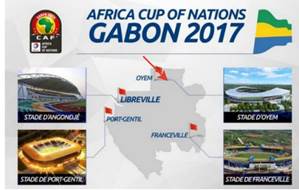
However, the term "sports diplomacy" does not have a generally accepted definition. To describe it in general terms, "sports diplomacy" is used to normalize relations between states through the prism of international sporting events. Therefore, it is necessary to consider how domestic and foreign scientists approach the definition of this term: for example, D. Eidemiller means by "sports diplomacy" a set of tools, forms and mechanisms used by the state to promote its interests in the international arena through the channels of sports interaction [2]. A.O. Naumov suggests this version: Sports diplomacy is the activity of governmental and non-governmental structures within the framework of the implementation of the state's foreign policy course by organizing, conducting and participating in international sporting events [3]. S. Murray positions "sports diplomacy" in his research in the form of representative and diplomatic activities carried out by athletes on behalf of and jointly with their governments [4]. Chinese researchers have also raised the topic of sports diplomacy in their country and globally. For example, Liu Zhaoyi considers sports diplomacy of the PRC not as an isolated area, but as an integral part of the country's overall foreign policy strategy [5]. Wang Rui and Luo Ye took a very interesting topic for their research, in which they compare the history of the development of sports diplomacy in China and Russia. In their understanding, China is characterized specifically by a systematic approach in which sporting success is directly linked to the image of the state and its status in the international arena [6]. Having immersed himself in different points of view and returning to the origins of the concept of J. Naya Jr., in my opinion, sports diplomacy is a component of soft power that helps states normalize bilateral relations through the lens of sports. The historical context of Chinese sports diplomacy As the experience of world history shows, the Chinese government has always sought to use top-level sports as a diplomatic tool and to spread its influence around the world. Since the founding of the PRC in 1949, this policy has been significantly developed and promoted, with China's sports industry becoming a major achievement attracting the attention of the entire country. Historical examples of the use of sports to enhance China's prestige and create a positive image on the international stage can be found in China's relations with the Olympic Movement. For example, the debut of the Chinese national team at the Olympic Games in Helsinki in 1952 demonstrated the potential of sport as a powerful tool in achieving the political and diplomatic goals of the Chinese government [7]. However, the Republic of China also applied to the IOC to participate in the Olympic Games separately from the PRC, but in protest, Taiwan decided to boycott the Olympic Movement after learning that China would participate [8]. This was one of the consequences of the first Taiwan crisis. And in 1958, the Chinese government decided to boycott the Olympic Games. The most striking example of the successful implementation of sports diplomacy was the appearance of the so-called "ping-pong diplomacy" in the 1970s, which resulted in a significant shift in Sino-American relations [9]. What started as an informal meeting between members of the American and Chinese table tennis teams has developed into an initiative by an American non-profit organization to organize an American visit to China. The governments of the two rival countries welcomed this initiative and used it to assess public opinion on a possible rapprochement between the two powers. The joint efforts of athletes and politicians led to the visit of National Security Adviser H. Kissinger to China in July 1971, and less than a year later, in February 1972, U.S. President R. Nixon. Ping-pong diplomacy has become a classic example of how sport can act as a catalyst for fundamental changes in international relations. The next stage in the development of sports diplomacy in China was the return to the Olympic movement. After the end of the Chinese Cultural Revolution in Nagoya, Japan, in 1979, the IOC adopted a resolution to restore China's membership in the organization after a 21-year hiatus. In 1984, the Chinese national team returned and participated in the Summer Olympic Games in Los Angeles [8]. A special place in the strategy of sports diplomacy of the People's Republic of China is occupied by "stadium diplomacy", which implies assistance in the construction of sports facilities to other countries. In 1958, China financed the construction of the Mongolian National Stadium. Originally, the stadium, built with Chinese help, was called the Friendship Stadium [10]. Later, the Olympic Committee and scientific researchers proposed the term "stadium diplomacy" [10]. Until 1966, China used "stadium diplomacy" mainly in the socialist countries of Asia. The transition to reforms has influenced the expansion of the geographical scope of stadium diplomacy. Projects are being implemented in Indochina, Mongolia, the Caribbean and the South Pacific. China is most actively implementing "stadium diplomacy" in Africa. The first wave of construction occurred in the 1970s and 1980s. In the 1990s, the aggressive development of China's internal modernization process led to stagnation. Architectural practice resumed in the 2000s. The first project of stadium diplomacy in Africa was the opening of a 15,000-seat stadium in Tanzania in 1970 [11]. For almost half a century, China has been building sports facilities in almost every African country. In most cases, stadiums are built to host major regional or international sporting events. A striking example of "stadium diplomacy" is Gabon's preparations for the 2017 Africa Cup of Nations, which included the construction of four stadiums (see Figure 1).
Figure 1. Stadiums built by the PRC in Gabon for the African Cup of Nations. Source: http://stadiumdb.com/news/2016/10/new_stadium_and_designs_gabon_wont_be_fully_ready In recent years, China has been holding large-scale sporting events, which have influenced the perception of the country's image and strengthened its status as a sports power. The significance of Beijing's successful bid to host the 2008 Olympic Games in 2001 goes far beyond sports. Most importantly, this is an important political event for China, which has raised top-level sports in the country to a new level and provided an opportunity to use the Olympic Games to strengthen China's image as a rising modern economic power. The opening ceremony of the Olympic Games was attended by 54 heads of state and 10 high-ranking members of the royal families. Chinese officials have held more than 100 diplomatic meetings with leaders of other countries [7]. The 2022 Winter Olympics in Beijing were the next stage that demonstrated China's ability to host world-class events in the context of the COVID-19 pandemic [12]. Thus, the Olympic Games can be considered as a major diplomatic event. In addition, China supports the initiatives of regional sports events, which undoubtedly help to develop sports diplomacy. One of the largest sporting events was the II Asian Youth Games, which took place in Nanjing in 2013 and brought together young athletes from 45 countries. Similar competitions are held every four years among young athletes in Asian cities to test their abilities before the Youth Olympic Games. In 2014, Nanjing also hosted another major sporting event, the Summer Youth Olympic Games. These are Special Olympic Games for young athletes between the ages of 14 and 18. The summer and Winter Games are held every four years: summer – since 2010, winter – since 2012. Athletes from 204 countries gathered at the Youth Olympic Games in Nanjing [13]. To better represent the image of Nanjing, the organizing committee drew on the experience of the Sochi Winter Olympics and global sports diplomacy. 105 young people from 105 countries were chosen as ambassadors for the 2014 Youth Olympic Games. Most of these ambassadors are athletes from different countries, and their mission is to promote the Youth Olympic Games and Olympic values. The 2014 Youth Olympic Games became the largest brand project in Nanjing and even in China, as a result of which sports diplomacy achieved significant results. The Chinese leadership is increasingly positioning the country's major cities as suitable venues for large-scale events. China has hosted three World Championships in table tennis (1961, 1995, 2005), rhythmic gymnastics (1999), taekwondo (2007), figure skating (2015) and athletics (2015). The Summer Universiade was held in Beijing in 2001, in Shenzhen in 2011 and in Taipei in 2017. After the launch of the SCO Cultural and Sports series 2020-2021 China, Russia, and the SCO member states have jointly organized a series of sporting events, including marathon races, boxing matches, yoga, tai chi, and others [14]. The Zhejiang University Football Cup has laid a solid foundation for shaping public opinion about building a Community for the common future of the SCO. Ping-pong diplomacy played a very important role in the development of sports diplomacy in China, turning sports into a tool of "soft power" for global politics. Undoubtedly, it can be said that the 1971 World Table Tennis Championships, during which the American side received an invitation to visit Beijing, became the starting point for the official restoration of diplomatic relations between the United States and China in 1979. There is an understanding that sports diplomacy can be a way to normalize bilateral relations. Stadium diplomacy has become the first stage in the evolution of sports diplomacy in China, which involves infrastructure investments. Chinese companies have begun to pay great attention to the construction of stadiums in developing countries. Thanks to stadium diplomacy, China was able to implement sports facilities, helping developing countries cope with the problem of lack of funding or technology. Thus, China has strengthened bilateral relations, receiving political support in the international arena in return. The problems of Chinese sports diplomacy One of the most important issues in China's relations with the international community, including sports, is the issue of Taiwan's sovereignty. In the context of high-performance sports, this unresolved issue is reflected in the status of the national sports federations of the People's Republic of China and the Republic of China within the respective international sports federations. The Beijing government has refused to allow Taiwanese athletes to participate in international competitions under any name implying Taiwan's sovereignty or Taiwan's claims to China. However, in most cases, a compromise was reached allowing both political structures to represent their sports teams. As for the Olympic Games, officials from Beijing and Taipei, with the support of the diplomatic corps of the International Olympic Committee, have reached an agreement that Taiwanese athletes will compete under the name "Chinese Taipei" and under the Olympic flag.
In particular, the decision to hold the 2008 Olympic Games and the 2022 Winter Olympics in China has attracted criticism from human rights activists calling for the Games to be moved to another country or boycotted, as free societies in developed countries disagree with this decision. China's policy regarding its sovereignty, special territories, and human rights violations. Any criticism of China's domestic policy provokes a painful reaction. The slightest hint is negatively perceived by the Chinese side, including on television, radio and in trade structures, and may even affect relations with foreign partners. An example of this feature of relations with China is the situation around two famous athletes. German football player M. Ozil, who played for Arsenal football club, published a critical statement on one of the Chinese government's policies towards Uighurs in late 2019, after which the Chinese state broadcaster CCTV stopped broadcasting the Arsenal—Manchester City football match [7]. In addition, the company that developed the Chinese version of the video game Pro Evolution Soccer has removed the character M. Ozil withdrew from the Chinese version of the 2020 game, saying his comments offended the feelings of the Chinese fans of the game. In October 2019, several Chinese companies sold the Houston Rockets, an American professional basketball team of the National Basketball Association (NBA), after its CEO, D. Mori, expressed support for the protesters in Hong Kong on social media. CCTV has canceled broadcasts of NBA games again, and some events included in the pre-season tour of China have also been canceled. D. Mori apologized, and the NBA itself distanced itself from discussing political issues [7]. China's investment in Formula 1 In the 1990s, the Chinese government intended to create a track for the Formula 1 Grand Prix and junior series in Zhuhai, Guangdong Province. But the construction was constantly delayed. However, the initiative group from China gained an advantage by hosting the Macau Grand Prix. In 1999, Macau became a special administrative region of China, and it really helped, because from that moment on, the race was not held under the British flag. In 2004, the most expensive track in the history of Formula 1 was built. Its cost was 240 million US dollars [15]. The financing was carried out by joining forces with Shanghai Juss Corporation, Shanghai National Property Management Co Ltd and Shanghai Jia'an Investment and Development Co Ltd [16]. It can be said that the construction of the Shanghai highway took nine years, as the development of a highway that meets international standards was a difficult task. However, the project was implemented flawlessly, and the first Chinese Grand Prix was held in 2004. 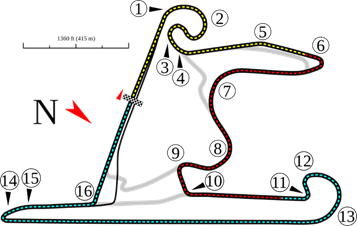
Figure 2. Route diagram of the Shanghai International Circuit. Source: https://www.formula1.com/en/information.china-shanghai-interational-circuit-shanghai .7ESK3ZQ5DHqihx3DpPZKWL.html Figure 2 shows the route layout of the Shanghai International Circuit. The track has 16 turns (7 of them are left, 6 are right). The length of the route is 5,451 m. It is interesting to note that the highway resembles the Chinese symbol "Yongyi", which in one of the meanings can be interpreted as "get in the car". The track is unique in its starting point: riders race through increasingly steep turns 1 and 2 before turning sharply left into turns 3 and 4. Riders love turns 7 and 8 with their ultra–high G-forces, and the track boasts one of the longest straights on the calendar - a 1.2-kilometer stretch separating turns 13. and 14. Between turns 13 and 14 there is the longest high-speed straight with a length of 1,175 meters, as well as two long right turns with a variable radius, which distinguish this route from the others. The width of the track varies from 13 to 15 meters, reaching 20 meters at the 13th turn. Wide safety zones allow cars to be evacuated without stopping the race, but despite this, in the last few years, a safety car has often intervened during the fight. The track has a certain height difference: the lowest point of the circuit is 4.5 meters above sea level, and the highest is 11.24 meters. The track can accommodate up to two hundred thousand fans at a time, thirty thousand of whom can be accommodated on the main stand, which overlooks 80% of the track [17]. The track is very difficult and treacherous, but it is loved by the racers. In 2007, the former head of the highway administration, Yu Zhifei, was convicted of corruption and embezzlement, which led to the dismissal of several high-ranking officials of the Chinese Communist Party. This event undermined China's authority in the eyes of the FIA (International Automobile Federation). The case went on for quite a long time, and meanwhile, the contract signed with Chinese investors was valid only until 2011. And then the question arose: will the operation of the track and the holding of races on it be extended? As a result, the operation was extended until 2017 [18]. In 2017, a new three-year contract was signed. Unsurprisingly, races in 2020, 2021, and 2022 were canceled due to the COVID-19 pandemic. However, Formula 1 extended its contract with the Chinese Grand Prix, so that the championship will race in Shanghai until 2025, and soon after signing a new contract, the competition was extended until 2030 [19]. 
Figure 3. The validity period of the contracts concluded with the Shanghai Autodrom. Source: compiled by the author according to the data, the Shanghai Race will remain on the calendar until 2030 // F1News.ru . URL: https://www.f1news.ru/news/f1-178769.html (accessed: 12/20/2025).
Thanks to this chart, it is possible to understand how many contracts have been concluded, and to see that the FIA is now seeking to conclude shorter contracts with the Chinese circuit, but in general this trend is not unique to the Chinese Grand Prix. For example, the Russian Grand Prix in Sochi was supposed to be held until 2023, and then moved to St. Petersburg, but was canceled on March 1, 2022 due to the Ukrainian crisis [20]. Of course, in the case of the Chinese highway, short-term contracts can be explained by distrust of the organizers (the case of 2007), but to a greater extent this was influenced by the coronavirus pandemic. Thus, political trends also have an important weight in this sport. It is well known that Formula 1 teams announce information about their drivers (who joins, who leaves) at the end of the year. On November 16, 2021, the Alfa Romeo team made an announcement: Guanyu Zhou, a Chinese Formula 2 driver, is joining the team, and next year he will be a Formula 1 driver with his partner Valtteri Bottas at Alfa Romeo Racing [21]. The 22-year-old racer became the first permanent Formula 1 driver from China. In these circumstances, the question arises: how did Guanyu's arrival affect sports diplomacy in China as a whole? And now let's go back to 2021: three young and talented Formula 2 drivers are competing for a ticket to represent Alfa Romeo in Formula 1. Oscar Piastri is an Australian child prodigy – he won the Formula 3 championship in 2020 and confirmed his superiority in Formula 2 the following year. Robert Schwartzman is the Formula 3 champion in the 2019 season and the second after Piastri in the 2021 season in Formula 2. The third interesting candidate is Zhou Guanyu, who was in third place in the standings after Oscar and Robert. 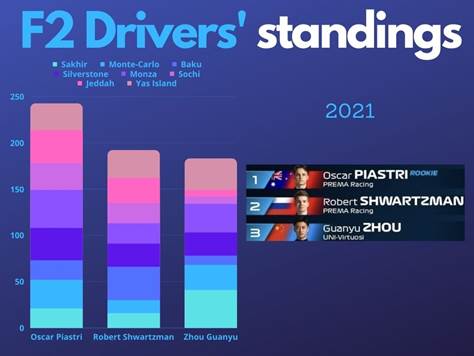
Figure 4. Results of the Formula 2 Championship in 2021 Source: compiled by the author based on the 2021 Formula 2 standings. (https://www.fiaformula2.com/Standings/Driver?seasonId=178 ) Figure 4 shows the results of the Formula 2 drivers in 2021: Piastri is in 1st place, ahead of Schwarzman by 60.5 points, and Zhou is in 3rd with 183 points. In Figure 2, you can see a detailed breakdown of the points by 8 stages. In short, Oscar has surpassed all other pilots. As for Alfa Romeo's decision, they had to choose between Pisastri and Zhou. The first of them is the winner of two junior series: roughly speaking, an excellent foundation has been laid to let the team test the strength of a young fighter in the "Queen of Auto Racing", but despite all the advantages that Oscar has, they chose Zhou. But why? The reason is very simple: Zhou probably received significant support from China, according to some sources, up to 30 million US dollars [22]. Nevertheless, Zhou performed very well in the 2022 Formula 1 season. He took the 18th place out of the top 20 pilots on the planet, and do not forget that Guanyu is just a beginner. Many people in their debut season may not get into the top 10 in the race at all and get points accordingly. The 2024 Chinese Grand Prix was a landmark event for Zhou, as it was the first stage held in Shanghai after restrictions were lifted due to the pandemic. The rider was honored almost as a prize-winner of the competition, despite the fact that he took only 14th place. In 2025, Zhou returned to Ferrari as a reserve driver, and in January 2026, Zhou signed a contract with the new Cadillac Formula 1 Team as an official reserve driver. In his new role, Zhou participates in the development of the car, using the experience gained over three seasons as a primary driver. Thus, the appearance of the first Chinese Formula 1 pilot is a kind of "soft power" tool. Zhou Guanyu is perceived in China as a national hero, his successes are covered by state media, and the image of the racer is used to create a positive perception of China abroad. The documentary about Zhou, "The First One," released in 2024 ahead of the Chinese Grand Prix, became part of this communication strategy. In any case, the share of Chinese investments in Formula 1 is very high. Let's recall the companies that helped build the highway in Shanghai: Shanghai Juss Corporation, Shanghai National Property Management Co Ltd and Shanghai Jia'an Investment and Development Co Ltd. The list of the largest sponsors of Formula 1 in the 2025 season should be considered. Table 1. Main sponsors of the Formula 1 World Championship in 2025 | Sponsor | Field of activity | The nature of the partnership | | Heineken | Brewing company | Global Partner (since 2016), extended agreement for 2025-2028. F1 Fan Zone presented by Heineken 0.0, nominal rights to three Grands Prix per season | |
LVMH | Luxury goods | Multi-year agreement from 2025 (six brands, including TAG Heuer, Louis Vuitton, Moët & Chandon) | | Nestlé (KitKat) | Food products | Global Partner | | PwC | Consulting services | Official consulting Partner | | Barilla | Food products | Partner (catering areas at Paddock Club) | | Salesforce | CRM and cloud technologies | Technological partner of the championship | | Lenovo | Computer equipment | Global Technology Partner (since 2022, status upgraded in 2025) | | AWS (Amazon) | Cloud Computing | Technological partner of the championship | | Crypto.com | Cryptocurrency Exchange |
Global Partner | | Pirelli | Tire Manufacturer | Global partner and exclusive tire supplier |
Source: compiled by the author based on the data https://corp .formula1.com/formula-1-and-heineken-announce-expanded-multi-year-global-partnership/; https://www.grandprix247.com/formula-1-news/formula-1-closing-in-fast-on-the-nfl-sponsorship-earnings; https://infocity.tech/2025/08/kakie-tehnologicheskie-kompanii-podderzhivayut-komandy-formula-1-v-2025-godu/ Three of them own huge shares of Chinese stocks: Heineken, Pirelli and Lenovo. In August 2018, China Resources invested US$ 540 million in Heineken [23]. As for Pirelli, China National Chemical Corp. It acquired this company in 2015 for 7,860,000,000 billion US dollars [23]. In 2020, they invested another $580 million [23]. In 2022, a landmark event was the joining of Lenovo Corporation as a technical partner of the championship [24]. In January 2025, Lenovo became a "global technology partner", which was an unprecedented first time when a Chinese company achieved such a level of integration in the field of international motorsport. According to Nielsen Sports, after the start of cooperation with Lenovo, brand awareness among the technically oriented F1 audience increased by 64% in 2023 compared to 41% in 2022, and the effectiveness of sponsorship exceeded the average of other global partners of the championship by 35% [25]. In these circumstances, China plays a huge role in investing in Formula 1. The construction of the Shanghai Autodrome has greatly strengthened China's position in international motorsport. But still, it was an infrastructure project again, and in the 21st century, sports diplomacy has acquired a new dimension, so China had to switch from stadium construction to other forms of sports diplomacy. And this is quite logical, since China has achieved the status of the "second economy in the world", which requires new platforms to demonstrate its technological potential. Moreover, the traditional formats of sports diplomacy seemed to have been exhausted: the Summer and Winter Olympics (2008, 2022) were held. And, undoubtedly, China has motives to integrate into Western media and technological discourses in order to attract a global audience and create a positive image of the state. Conclusion Summing up the study, despite the fact that there is no single fixed term "sports diplomacy" yet, the study concluded that sports diplomacy is a component of soft power that helps states normalize bilateral relations through the prism of sports. It should be noted that sports diplomacy of the PRC was used to achieve specific national goals. The first stage, ping–pong diplomacy, was a breakthrough in international isolation and also contributed to the normalization of relations with the United States. The second stage, "stadium diplomacy", became a period of strengthening ties with developing countries. The third stage, investments in Formula 1, helped shape the image of a technologically advanced country. The key factors that influenced the evolution of sports diplomacy tools were China's economic growth, the saturation of traditional forms of sports diplomacy, and the pursuit of technological leadership. In the case of China, sports diplomacy has evolved over a long period of time from "ping-pong diplomacy" in the 1970s, which helped normalize U.S.-China relations, to stadium diplomacy aimed at strengthening ties with developing countries, leading Beijing to host the Olympic Games in 2008 and 2022, where a positive image of the country was formed, despite responding to global challenges in the form of boycotts and pandemics. At each of the above stages, sport was perceived not only as achievements, but also as a tool for implementing foreign policy objectives. Integration into Formula 1 has become a completely new stage in the development of sports diplomacy in China. The field of auto racing has opened up opportunities for China to enter the world of high-tech and investment-intensive sports, which is inextricably linked with a media-saturated Western audience. The study identified three interrelated areas of Chinese investment in Formula 1: 1. Infrastructure development – the construction of the Shanghai International Circuit in 2004 and the extension of contracts with it, despite the global challenges of Yu Zhifei's corruption and the pandemic, allowed China to ensure a permanent presence on the championship calendar. 2. Financing – Chinese companies were able to acquire Pirelli, a stake in Heineken, Lenovo, and even became the global technical partner of the championship. These cases symbolize that China is demonstrating itself as a high-tech power that controls significant elements of the industry. 3. Personnel policy – the appearance of Zhou Guanyu, the first rider to compete under the Chinese flag, strengthened the positive image of China. Zhou's case demonstrates that the "human factor" in sports diplomacy can be no less significant than infrastructural and financial investments.
The contradictions that may be related to sports diplomacy in China play a very important role. In this case, criticism of the state's domestic policy is very acutely perceived by the government, showing that the use of sports as a tool of "soft power" has its limits, and any statement perceived as interference can lead to serious diplomatic and economic consequences. Thus, investments in Formula 1 have become a new stage in the evolution of sports diplomacy in China. This is a new component of the implementation of "soft power" for China, which allows solving economic problems such as the development of tourism, the entry of Chinese companies into the global market, as well as attracting foreign investment in high-tech sectors of the Chinese economy. Formula 1 is not only a sport, but also an ingenious platform for demonstrating new engineering solutions and advanced developments, which helps China to form a positive image of a high-tech power in the international arena.
The article is published in the version approved by the reviewers (after receiving the final positive review recommending the manuscript for publication), with corrections made by the author (submitted after receiving preliminary negative reviews that did not recommend the manuscript for publication).
All reviews (including preliminary negative reviews) are published in open access directly after the text of the article itself. All versions of the author's corrections are stored in the publisher's repository and may be available upon request by authorized organizations.
Read all reviews for this article
References
1. Nye, J. S. (1990). Soft power. Foreign Policy, 80, 153-171. https://doi.org/10.2307/1148580
2. Eydemiller, D. (2024). Sports diplomacy in China's foreign policy: tools, forms, mechanisms. Mission of Confessions, 7, 33-40.
3. Naumov, A.O. (2017). Sports Diplomacy as a "Soft Power" tool. World Politics, 4, 32-43. https://doi.org/10.25136/2409-8671.2017.4.24852
4. Murray, S. (2012). The two halves of sports-diplomacy. Diplomacy & Statecraft, 23(3), 576-592. https://doi.org/10.1080/09592296.2012.706544
5. Liu, C. (2023). Features of China's sports diplomacy. Social and Political Sciences, 3, 45-51.
6. Wang, J., & Luo, E. (2022). Historical changes and development paths of sports diplomacy in China and Russia. Innovative Science, 8-1, 24-29.
7. Dolmatova, T. V., Kuznetsova, E. V., Morozov, V. N., & Pankov, V. A. (2021). Features of the development of sports diplomacy: analysis of international experience using the example of China. Bulletin of Sports Science, 4, 10-15.
8. Petrenko, Y. A. (2019). How the PRC became one of the leading sports powers in the world. Foreign Languages in the Modern World, 110-111.
9. Martynenko, S. E., Trusova, A. A., & Chernyaev, M. S. (2019). Ping-pong diplomacy: influence on the establishment of Chinese-American relations. Bulletin of the Russian University of Friendship of Peoples. Series: International Relations, 19(1), 139-147. https://doi.org/10.22363/2313-0660-2019-19-1-139-147
10. Dubinsky, I. (2021). China's stadium diplomacy in Africa. Journal of Global Sport Management, 6(2), 8-24. https://doi.org/10.1080/24704067.2019.1657738
11. Wang, K. (2022). Russian-Chinese sports cooperation: analysis of achievements, problems and development prospects. Theories and Problems of Political Studies, 11(3), 112-120.
12. Shishkina, A. A. (2022). Olympic Games and the "soft power" of leading world powers. Bulletin of the Russian University of Friendship of Peoples. Series: State and Municipal Administration, 9(3), 291-300. https://doi.org/10.22363/2312-8313-2022-9-3-291-300
13. Second Summer Youth Olympic Games kick off in Nanjing, China [Electronic resource]. (2014, August 16). RIA Novosti. https://ria.ru/20140816/764898817.html
14. Karpovich, O. G., & Smagina, L. A. (2025). Political and legal aspects of new formats of multilateral sports cooperation (within the framework of the CIS, SCO, BRICS). Ethnosocium and Interethnic Culture, 10(208), 99-111.
15. Grand Prix Shanghai set to go [Electronic resource]. (2002, October 18). China.org.cn. http://www.china.org.cn/english/2002/Oct/46457.htm
16. Chinese Grand Prix-Shanghai International Circuit [Electronic resource]. F1Report.ru. https://f1report.ru/tracks/china-grand-prix.html
17. Rul, R., Oje, D., & Lafond, M.-P. (2023). Formula 1, city and tourism (translated from English by A. V. Gorshkova). Tourism and Sports Events, 6(4), 813-830.
18. Shanghai extends F1 race seven years [Electronic resource]. (2011, February 17). France 24. https://www.france24.com/en/20110217-shanghai-extends-f1-race-seven-years
19. The race in Shanghai will remain on the calendar until 2030 [Electronic resource]. (2024, December 6). F1News.ru. https://www.f1news.ru/news/f1-178769.html
20. Formula 1 cancels Russian GP [Electronic resource]. (2022, February 25). Sky Sports. https://www.skysports.com/f1/news/12433/12550515/russian-gp-formula-1-say-2022-race-impossible-to-hold-following-ukraine-invasion
21. Alfa Romeo announce Guanyu Zhou as Valtteri Bottas's teammate for 2022 [Electronic resource]. (2021, November 16). Formula 1. https://www.formula1.com/en/latest/article.breaking-alfa-romeo-announce-guanyu-zhou-as-valtteri-bottass-team-mate-for.3FGtpRMOhG1qZ4Qinr8ky6.html
22. Guanyu Zhou: First Chinese driver is huge for Alfa and F1 [Electronic resource]. (2021, November 16). CNN. https://edition.cnn.com/2021/11/16/motorsport/guanyu-zhou-f1-spt-intl/index.html
23. China Global Investment Tracker [Electronic resource]. (2026). American Enterprise Institute. https://www.aei.org/china-global-investment-tracker/
24. Lenovo becomes Global Partner of Formula 1 in renewed deal [Electronic resource]. (2025, January 10). Formula 1. https://www.formula1.com/en/latest/article/lenovo-becomes-global-partner-of-formula-1-in-renewed-deal.1xwn58ZpFjFZQpnvvfXLDb
25. From Shanghai track to the world stage: Lenovo reshapes F1 technology with AI and innovation [Electronic resource]. (2025, March 24). Dongfang Caifuwang. https://gubaf10.eastmoney.com/news,hk00992,1532301218.html
First Peer Review
Peer reviewers' evaluations remain confidential and are not disclosed to the public. Only external reviews, authorized for publication by the article's author(s), are made public. Typically, these final reviews are conducted after the manuscript's revision. Adhering to our double-blind review policy, the reviewer's identity is kept confidential.
The list of publisher reviewers can be found here.
The article submitted for review is devoted to the evolution of sports diplomacy as a tool of China's soft power, using the example of this country's investments in Formula 1 racing. Since various resources and mechanisms of soft power are becoming increasingly important in the foreign policy of states (including China), the relevance of the topic is beyond doubt. However, the current version of the manuscript needs substantial revision in order to meet existing academic standards. First of all, it is necessary to write a full–fledged introduction, which should outline the key parameters of the research undertaken by the author - 1) the research problem (for example, "factors of effectiveness of Chinese sports diplomacy"); 2) the purpose of the study (for example, "to determine the impact of investments in Formula 1 on the development of sports diplomacy in China") and objectives (what steps should be taken to achieve the goal?); 3) methodology or approach to solving the research problem/ achieving the goal (what empirical data should be collected and how should they be analyzed?); 4) justification of the scientific novelty of the research results obtained by the author (what is the contribution of this article to the existing knowledge about Chinese sports diplomacy?). Here it is desirable to substantiate the chronological framework of the study, as well as explain why the author focuses specifically on Formula 1. It also remains unclear – how are "stadium diplomacy" (the second section of the article) and Chinese investments in Formula 1 related? Further, the research should be well–founded - that is, based on academic work on the chosen topic. In its current form, the bibliographic list looks rather modest – only 17 titles, including primary sources. You can advise the author to pay attention to the following publications – Liu Ch. Features of China's sports diplomacy // Socio-political Sciences. 2023. No. 3; Dolmatova T., et al. The specifics of the development of sports diplomacy: an analysis of international experience on the example of China // Bulletin of Sports Science. 2021. No. 4; Eidemiller D. Sports diplomacy in China's Foreign Policy: tools, forms, mechanisms // Mission of confessions. 2024. No. 7; Wang J., Lo E. Historical changes and ways of developing sports diplomacy in China and Russia // Innovative Science. 2022. No. 8-1; Chen Yu. The 2022 Olympic Games as an instrument of China's Public Diplomacy // Society: Politics, Economics, Law. 2025. № 5. The structure of the text also needs to be adjusted – it is necessary to devote an independent section to the analysis of the concept of "sports diplomacy" (in the current version of the article there is not even a definition of this concept). At the same time, it makes sense to mention the concept of "soft power" by J. Nye Jr., since sports diplomacy is usually considered precisely within the framework of this approach. Next, we can proceed to the analysis of the historical context (how did Chinese sports diplomacy originate and develop?) and only then consider the "problems of Chinese sports diplomacy" and the factor of Chinese investments in Formula 1. Finally, in conclusion, it is necessary to focus on the new knowledge about Chinese sports diplomacy obtained by the author based on the results of the conducted research.
Second Peer Review
Peer reviewers' evaluations remain confidential and are not disclosed to the public. Only external reviews, authorized for publication by the article's author(s), are made public. Typically, these final reviews are conducted after the manuscript's revision. Adhering to our double-blind review policy, the reviewer's identity is kept confidential.
The list of publisher reviewers can be found here.
Evaluating the revised version of the manuscript, it is possible to note some progress made by the author in the process of finalizing the text. A full-fledged introduction was written, containing a justification for the relevance of the topic, object, subject and purpose of the study, as well as methodology, scientific novelty and chronological framework of the study. However, there are still a number of issues that require further adjustments. Thus, in the current version of the article, the formulations of "object" and "subject" partially coincide in terms of mentioning the tools of sports diplomacy. In my opinion, it is better to define the "object" as "sports diplomacy of the PRC", and the subject as "instruments of sports diplomacy of the PRC (using the example of investments in Formula 1). Certain changes should also be made to the methodology description. First of all, the case study method is better correlated with China's investments in Formula 1, as it is this case that occupies the central place in the article. The construction of the highway in Shanghai and, moreover, the career of racing driver Zhou Guanyu are among the particular examples that allow us to judge the directions of modern sports diplomacy in China. Further, the justification of scientific novelty should be correlated with the new research results obtained by the author based on the results of the analysis. "Complex analysis" is a research method and cannot in itself constitute a scientific novelty. However, using this method may lead to some knowledge about the development trends of modern Chinese sports diplomacy. It is on this knowledge that the emphasis should be placed in substantiating the scientific novelty of the research undertaken by the author. In the section "theoretical foundations of sports diplomacy", it is more logical to start with the concept of "soft power" by J. Nye Jr. and only then can we move on to sports diplomacy as one of the tools for achieving national goals (on the principle of "from the general to the private"). At the end of the section "the historical context of sports diplomacy of the People's Republic of China", it is advisable to generalize about what goals China has managed to achieve with the help of "ping-pong" and "stadium" diplomacy. This will allow us to move on to the central topic of the article related to China's investments in Formula 1. In the section "China's investments in Fomula-1" it is necessary to show – what contributed to the fact that China began to make appropriate investments? Therefore, we need to start with the fact that in 1999 Macau came under the jurisdiction of China and only then proceed to the construction of a highway in Shanghai. It should also be explained why China switched from stadium construction to other forms of sports diplomacy at the beginning of the 21st century. In conclusion, we should also focus on how sports diplomacy was used to achieve China's national goals and what factors influenced the evolution of the tools used by Beijing? At the very end, the author claims that sports diplomacy allows the PRC to solve economic problems, without specifying which ones? And why does investing in Formula 1 improve China's image as a "high-tech power" rather than, say, a "sporting power"? The answers to these questions would help make the author's arguments and conclusions more logical and understandable to the readership.
Third Peer Review
Peer reviewers' evaluations remain confidential and are not disclosed to the public. Only external reviews, authorized for publication by the article's author(s), are made public. Typically, these final reviews are conducted after the manuscript's revision. Adhering to our double-blind review policy, the reviewer's identity is kept confidential.
The list of publisher reviewers can be found here.
As presented after revision, the reviewed manuscript makes a very favorable impression. The relevance of the topic chosen by the author is convincingly justified – China is increasingly using various tools of "soft power" to improve its national image and promote its interests in the international arena. Sports diplomacy is one of these tools, especially in the context of the increasing politicization of sports (including Olympic). In an effort to identify the role of sports diplomacy as a foreign policy tool of the PRC, the author traces its evolution over the past 50 years (since the 1970s) and examines in detail a specific case - China's investments in the organization of Formula 1 races in the period from 2004 to 2025 in three key areas (infrastructure projects, sponsorship integration, human resources diplomacy). Based on the concept of "soft power" by J. Nye Jr. as the theoretical basis of the study, the author quite convincingly shows the evolution of Beijing's sports diplomacy over the past decades (from "ping-pong" and "stadium" diplomacy to investments in Formula 1). Among some remaining comments to the text, the following points can be highlighted. So, in the section "theoretical foundations of sports diplomacy", the author claims that this term "does not have a generally accepted definition." This is not entirely true, since there is a classic definition of sports diplomacy proposed by S. Murray – "the official and unofficial activities of states, governments, and special foreign policy bodies to implement the tasks of the state's foreign policy by organizing, conducting, and participating in international sports competitions involving teams, athletes, coaches, and their achievements" (Murray S. Sports-Diplomacy: a hybrid of two halves. 2011 // URL: https://www . culturaldiplomacy.org/academy/content/pdf/participant-papers/2011-symposium/Sports - Diplomacy-a-hybrid-of-two-halves--Dr.-Stuart-Murray.pdf). More information about this in Russian – Velikaya A., Semedov S. Russian sports diplomacy // Observer. 2022. № 2. At the same time, the author does not give his own definition of "sports diplomacy" (although this implies one of the objectives of the study), limiting himself to stating that "sports diplomacy is a component of soft power that helps states to normalize bilateral relations through the prism of sports." Further, in the section "Problems of Chinese sports diplomacy," the author provides several examples of how political issues can affect sports events involving China or organized by the Chinese government. It is advisable to clarify here how exactly improving the tools of sports diplomacy can help change the opinion of the world community on issues as sensitive to Beijing as Taiwan and the rights of the Uighurs. And can Chinese investments in Formula 1 achieve this goal? In general, the comments made are not of a fundamental nature and can be promptly taken into account by the author, after which the article can be approved for publication.
|





 © 1998 – 2026 Nota Bene. Publishing Technologies. NB-Media Ltd.


