|
Culture and Art
Reference:
Wang, Y. (2026). A Comparative Study of the Aesthetics of Chinese and Russian Teaware of the 18th-19th Centuries. Culture and Art, 2, 109–125. https://doi.org/10.7256/2454-0625.2026.2.78316
A Comparative Study of the Aesthetics of Chinese and Russian Teaware of the 18th-19th Centuries
Van Yaotin
ORCID: 0009-0008-8162-5358
Postgraduate student; Institute of History; St. Petersburg State University
Russia, St. Petersburg, Vasileostrovsky district, Sredny V.O. ave., 33 K. 15

|
st094681@student.spbu.ru
|
|
 |
Other publications by this author
|
|
|
DOI: 10.7256/2454-0625.2026.2.78316
EDN:
NNAAPU
Received:
02/20/2026
Published:
03/03/2026
Abstract: This study focuses on the artistic and aesthetic characteristics of Chinese and Russian teaware of the 18th–19th centuries in the context of intercultural interaction. The study encompasses the processes of form, ornamental design, material and technological solutions used in tea ware in the two countries, examining it as a material medium for cultural exchange within the framework of trade relations along the "Great Tea Road." The primary focus is on identifying the mechanisms of mutual influence between aesthetic systems through the analysis of specific artifacts represented in the museum collections of the Hermitage, the National Museum of China, and the Palace Museum. The methodological framework of the study integrates art historical analysis with artistic design tools. The study utilizes a method of analyzing historical sources to systematize trade and diplomatic documents, a comparative analysis to compare the plastic, ornamental, and technological solutions of teaware, an iconographic method to decode cultural symbols in decoration, and a materials science approach to study the influence of technological exchange on the formation of artistic styles. The chronological framework is defined by the heyday of the tea trade between China and Russia, when artistic exchange went through a full cycle from direct import to localization. The scientific novelty of this work lies in its study of the processes of aesthetic interaction between Chinese and Russian teaware as specific artifacts, which fills a significant gap in academic research traditionally focused on local aesthetic systems. The study demonstrates that Chinese teaware, with its aesthetic of natural restraint, influenced the development of Russian porcelain production and form-making, while Russian metalworking techniques and enamel art contributed to material and technological innovations in the Chinese tradition. Mutual creative dialogue shaped a synthetic artistic style that enriched both cultural traditions. The research findings have methodological implications for contemporary design, highlighting the need to preserve cultural identity while creatively absorbing intercultural influences through a model of equal dialogue and the flexible transformation of traditional techniques.
Keywords:
Chinese teaware, Russian teaware, intercultural dialogue, artistic aesthetics, Jingdezhen porcelain, Yixing ceramics, Russian enamel art, samovar, technological exchange, Great Tea Road
This article is automatically translated.
Introduction Since the 17th century, with the conclusion of the Treaty of Nerchinsk and other diplomatic and trade agreements, overland trade routes between China and Russia gradually became more passable, forming a network of material exchange, the core of which were tea, silk and porcelain. Within this network, the flourishing of the tea trade directly contributed to the spread and evolution of tea tableware, which acted as an accompanying material carrier. China, being the birthplace of tea, by the 18th century already possessed a mature aesthetic system of tea tableware, which was formed back in the Tang and Song eras. She was characterized by materials such as porcelain and Yixing clay, and she herself praised the beauty of the fusion of the natural principle and the human spirit. Russia, acting as an important market for tea consumption, not only adopted Chinese designs, but also, enriching them with local metalworking traditions, enamel art and aesthetic preferences, developed a nationally distinctive artistic style of tea tableware. As for the current state of scientific research, existing works mainly focus on the economic, commercial and cultural aspects of the history of tea trade between China and Russia, or on the study of tea art within the same country. For example, the book by I.A. Sokolov. "Tea and the Tea Trade in Russia: 1790-1919" focuses on the study of Russian tea culture, including samovar traditions. Most scientists in their research on the art of tea ware mainly focus on local aesthetic systems, while an in-depth analysis of intercultural interaction remains insufficiently studied [1]. Although there is considerable interest in the cultural heritage of the Russian-Chinese "Tea Way" in academic circles of art history, specialized research directly devoted to tea tableware as a specific artifact remains fragmentary. In turn, the field of artistic design rarely analyzes the logic of the evolution of tea ware design through the prism of historical and cultural exchange. As a result, the present study focuses on the artistic aesthetics of Chinese and Russian tea tableware of the XVIII-XIX centuries. By integrating the methods of analyzing historical sources and studying material objects characteristic of the history of art with the research aspects of artistic design (such as shaping, ornamentation and materials), this work conducts a systematic study of the processes of interaction and synthesis of aesthetics of tea utensils of the two countries, which fills a significant gap in academic research. The chronological framework of this study covers the period from the second half of the XVIII to the end of the XIX century. This period of time includes the entire path of tea trade between China and Russia — from its initial formation to its heyday, while artistic exchange in the field of tea utensils has gone through a full cycle from direct import to localization. The objects of research include Chinese porcelain and Yixing ceramics exported to Russia, as well as metal and enamel tea utensils produced in Russia, mainly represented in the collections of institutions such as the Hermitage, the National Museum of China and the Palace Museum (Forbidden City). In the methodological aspect, the following approaches are used: the method of analyzing historical documents to systematize records of tea tableware in the archives of Russian-Chinese trade; comparative analysis to identify similarities and differences in the shape, ornamentation and technology of making tea tableware of the two countries; iconographic method for the interpretation of cultural symbols in the decor; as well as the analysis of materials and technologies to study the influence of technical exchange on the formation of aesthetic styles.
Historical background and channels of artistic exchange of Chinese and Russian tea ware in the XVIII-XIX centuries. Trade arteries and a network of material exchange Since the beginning of the 18th century, China and Russia, through the conclusion of the Treaty of Kyakhta, established a key hub of cross-border trade with Kyakhta as a center, forming a system of water and land routes of the "Great Tea Way". Chinese tea was transported from regions such as Fujian, Hubei and Henan to Kyakhta, from where Russian merchants transported it to St. Petersburg, Moscow and other cities [2]. In the opposite direction, Russian furs and metal products arrived in China. At the turn of the 18th and 19th centuries, the mass circulation of tea directly stimulated the growth in demand for tea utensils. Chinese merchants, exporting tea, often included porcelain and Yixing ceramics as related products. The special predilection of the Russian aristocracy for Chinese tea ware not only further stimulated this trade, but also contributed to the penetration of the aesthetic principles of Chinese tea ware into Russian court culture. Cultural reflection and aesthetic perception Russians' perception of Chinese culture during the 18th and 19th centuries underwent a transformation from "curiosity about the exotic" to "aesthetic borrowing." In the 18th century, the Russian aristocracy viewed Chinese porcelain and tea utensils as rare luxury items used primarily to showcase wealth and status. With the spread of Enlightenment ideas, China's "Confucian rationalism" and "aesthetics of naturalness" attracted the attention of the Russian intellectual elite. The "refined elegance" of Chinese tea ware entered into a dialogue with the traditional "decorative luxury" of Russian taste, creating a relationship of contrast and complementarity. Russian Russian culture in China initially remained relatively limited, but after the penetration of Russian metalworking technologies into China through trade and diplomatic channels, they had a definite impact on the use of materials in Chinese tea utensils. Russian Russian gilding techniques were used by Chinese craftsmen to decorate lids, spouts, and other elements of Yixing ceramic teapots with metal parts, thus forming a style that harmoniously combines Chinese and Western elements (Fig. 1). In addition, Russian enameling techniques also penetrated China through such trade routes. ports like Guangzhou, and began to be used in the decoration of tea ware ornaments. 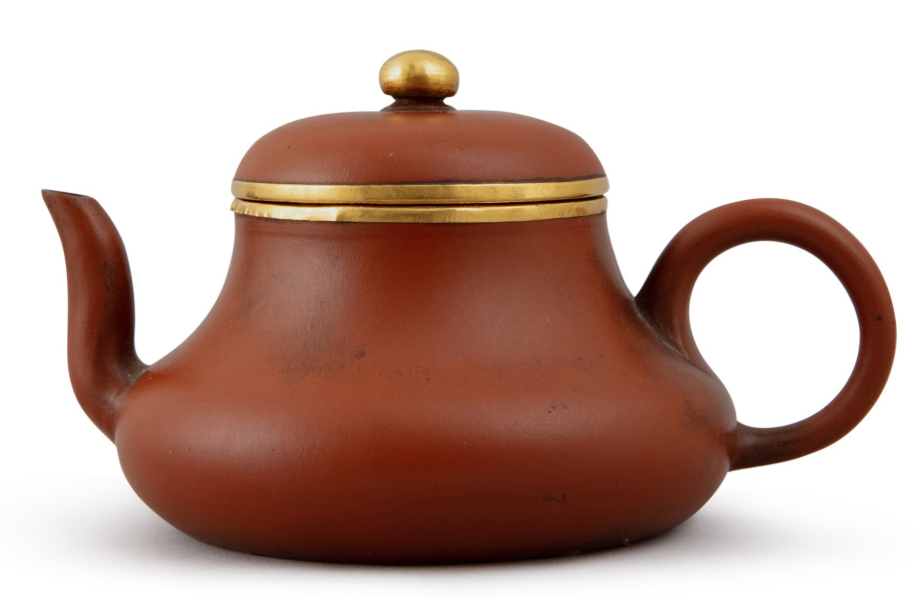
Fig. 1 Yixing ceramic teapot with metal inlay. At the turn of the XVIII—XIX centuries.. The width is 4⅛ in., 10.5 cm. Collection of Warren E. Cox (1895-1977), New York (according to the label).
Technological exchange and synthesis of techniques
The deepening of trade and cultural ties has contributed to the mutual penetration of tea tableware manufacturing technologies between China and Russia. Chinese porcelain production and Yixing ceramics technologies penetrated into Russia through the migration of artisans and technical literature [3]. In the middle of the 18th century, the St. Petersburg Porcelain Manufactory began producing imitations of Jingdezhen blue-and-white painted porcelain tea dishes, which, although noticeably different from their Chinese counterparts in the quality of the shard and glaze, clearly borrowed Chinese stylistic features in shapes and ornamentation. At the same time, Russian metalworking techniques such as copper casting and silver coinage influenced the production of tea tableware in China. Thus, the free functioning of trade arteries, the deepening of cultural reflection and the mutual exchange of technologies have jointly formed a key media system of artistic dialogue between Chinese and Russian tea tableware. This system not only ensured the trans-territorial transmission of the artifacts themselves, but also created a cultural space for equal dialogue, which allowed the two traditions, while preserving their national identity, to enrich each other through creative reflection, which laid solid historical and cultural foundations for subsequent aesthetic integration in the field of plastics, ornaments and materials science.
Artistic and aesthetic characteristics of Chinese tea ware exported to Russia in the XVIII-XIX centuries. Materials and technologies: the dominant position of porcelain and Yixing ceramics Chinese tea tableware exported to Russia in the XVIII-XIX centuries was mainly represented by porcelain and Yixing ceramics. Porcelain tea tableware was mainly produced in the furnaces of Jingdezhen, Dehua and Yixing. Among them, blue-and-white painted porcelain tableware from Jingdezhen has become the main product for export to Russia due to its elegant ornaments and stable glaze quality. The masters of Jingdezhen used the "two-component formulation method" to prepare porcelain paste by mixing kaolin and porcelain stone, which provided a thin and solid base. Cobalt was used as a pigment for the glaze: the patterns were applied to an unglazed base, covered with transparent glaze and fired with a single high-temperature firing at 1300 ° C, creating the classic effect of a "blue pattern on a white background" [4, p. 6]. The set of tea utensils "Bowl with lid depicting lotus flowers" from the Qianlong period (1662-1722) from the Hermitage collection is distinguished by its snow-white and fine porcelain base, shiny glaze and rich blue color of the painting, demonstrating the highest craftsmanship of Jingdezhen blue-and-white porcelain products. (Fig. 2) 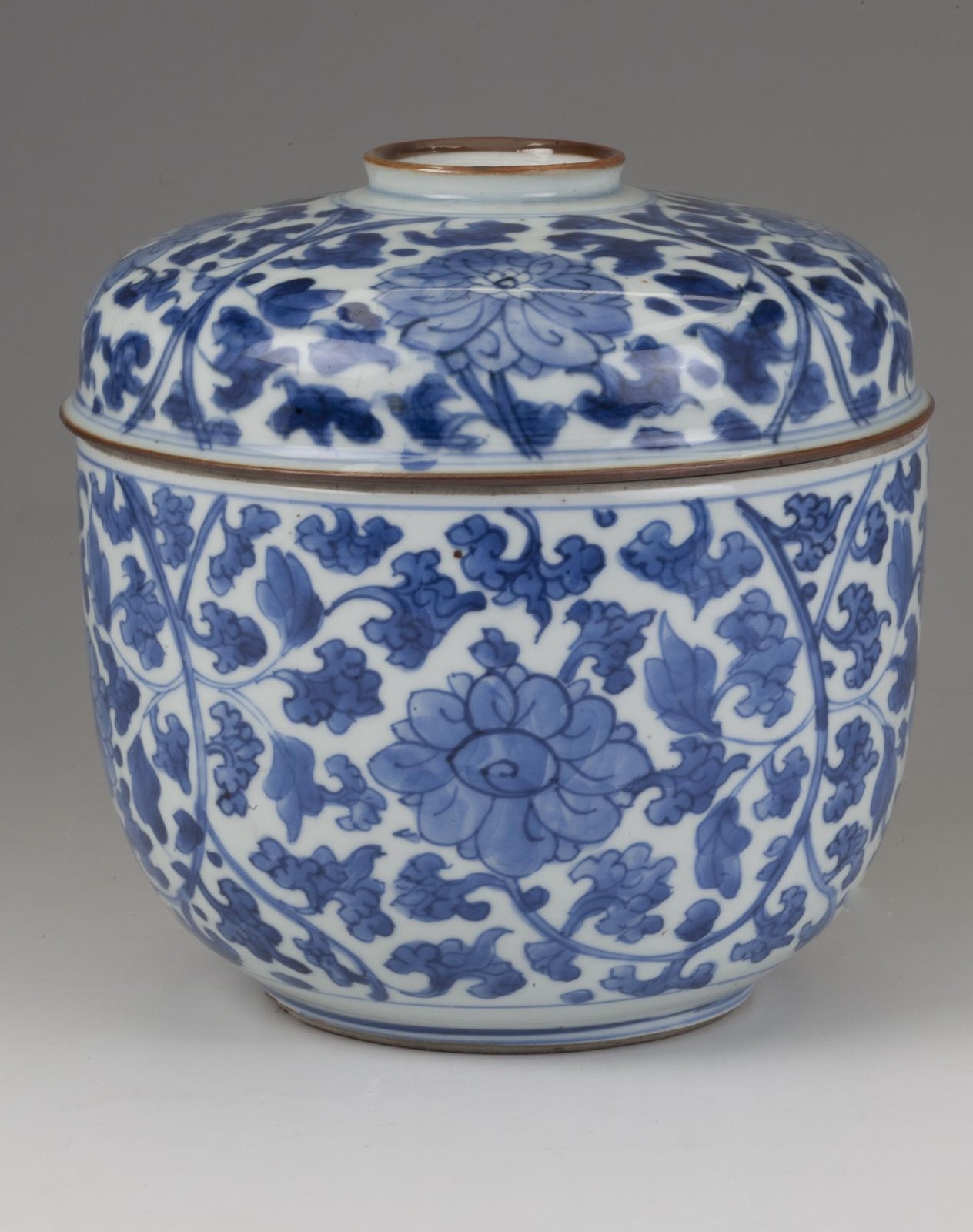
Fig. 2. A bowl with a lid with the image of lotus flowers. 1662-1722 The Kangxi period. 17.8 x 17.4 cm (cup); 5.7 x 17.6 cm (lid). Enrolled in 2002. Section of the Hermitage Collection: Collections of the Imperial Porcelain Factory Museum.
As for the Yixing ceramic tea tableware, Yixing clay is used for its manufacture, and the process itself involves manual molding and molding with blows, without applying glaze. Due to the fine texture and porosity of the clay itself, these products are considered excellent tea utensils. Yixing clay is divided into varieties such as zini (purple), hunni (red) and liuni (green), among which zini ware is the most common. The "Yixing Clay Round Teapot with the stamp of Chen Mingyuan of the Kangxi period" (1670-1680), kept in the National Museum of China, is made of Zining clay. (Fig. 3) Its body is rounded and full, the spout and handle are harmoniously proportional to the body, and the surface has a fine texture, which embodies the aesthetic desire of Yixing ceramics to "accentuate texture rather than jewelry." Such ceramic tea dishes, having got to Russia, won the love of the Russian aristocracy and became a collector's item that emphasized their taste. ![23771<sup><a href='#1024'>[1024]</a></sup>](https://e-notabene.ru/generated/78316/index.files/image003__.jpg)
3. A round Yixing clay teapot with the stamp of Chen Mingyuan from the Kangxi period. (“清康熙陈陈”) 1670-1680. Height: 9 cm, Base width: 5.5 cm. Collection of the Chinese National Museum. Plastic aesthetics: the unity of function and form The shapes of Chinese tea tableware exported to Russia were based on practicality and at the same time aspired to artistic expression, reflecting the design concept of "unity of function and form." Porcelain tea tableware included such basic shapes as teapots, cups, saucers and bowls. Among them, teapots most often had laconic outlines — round, square or flattened, with short spouts for convenient pouring. The cups were predominantly characterized by an open top, straight walls and an annular base, which made it convenient to hold and consume the drink. Researcher of the Palace Museum (Forbidden City) Wang Liying, studying porcelain products from the old palace collections of the Qing era, revealed the aesthetic features of the forms of tea utensils of this period. She notes that, created in the 18th century, during the Qianlong era, "A teapot with a story painting "Making tea in the rain" in the Fencai technique" ("粉彩烹茶纹壶") combines an oval body, a curved spout and a handle in the shape of a bamboo stem. This composition not only imitates the dynamic beauty of natural forms, but also thanks to the technique of overglaze painting subtly conveys details — images of people, landscapes, etc. — raising the decoration of tea dishes to the level of pictorial art. She particularly emphasizes that the aesthetic characteristics of Chinese tea tableware are directly related to the tastes of the imperial court and the aristocracy, such as the Qianlong Emperor's preference for Western enamel paints directly influenced the decorative style of tea tableware [5]. (Fig. 4). 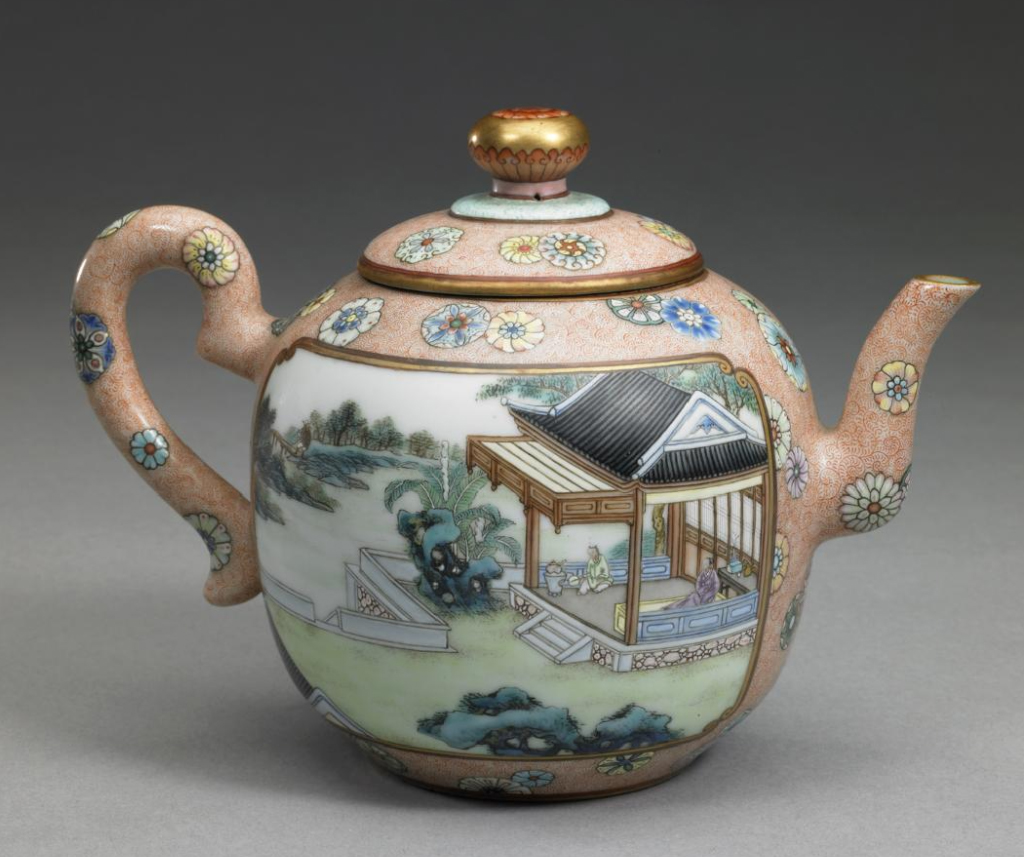
Fig. 4 Teapot with the painting "Making tea in the rain" in the Fencai technique. (“粉彩彩") 1735-1796. Height: 12.6 cm; neck diameter: 5.5 cm; base diameter: 6.3 cm. The collection of the Palace Museum, Beijing.
The shapes of the Yixing ceramic tea tableware are even more diverse. In addition to the traditional round and square shapes, biomorphic shapes such as "teapot-outgrowth on a tree" or "teapot-pumpkin" have become widespread, which, imitating natural objects, embody the ideas of aesthetics of naturalness. The pumpkin teapot created by Chen Mingyuan reproduces the shape of the vegetable of the same name: the body imitates the fruit, the spout and handle are stylized as shoots and leaves, and the texture is conveyed with a high degree of authenticity, filling the product with natural charm. (Fig. 5) Such biomorphic Yixing ceramics aroused great interest in Russia, and subsequently Russian craftsmen borrowed this principle when creating domestic samples of tea tableware. 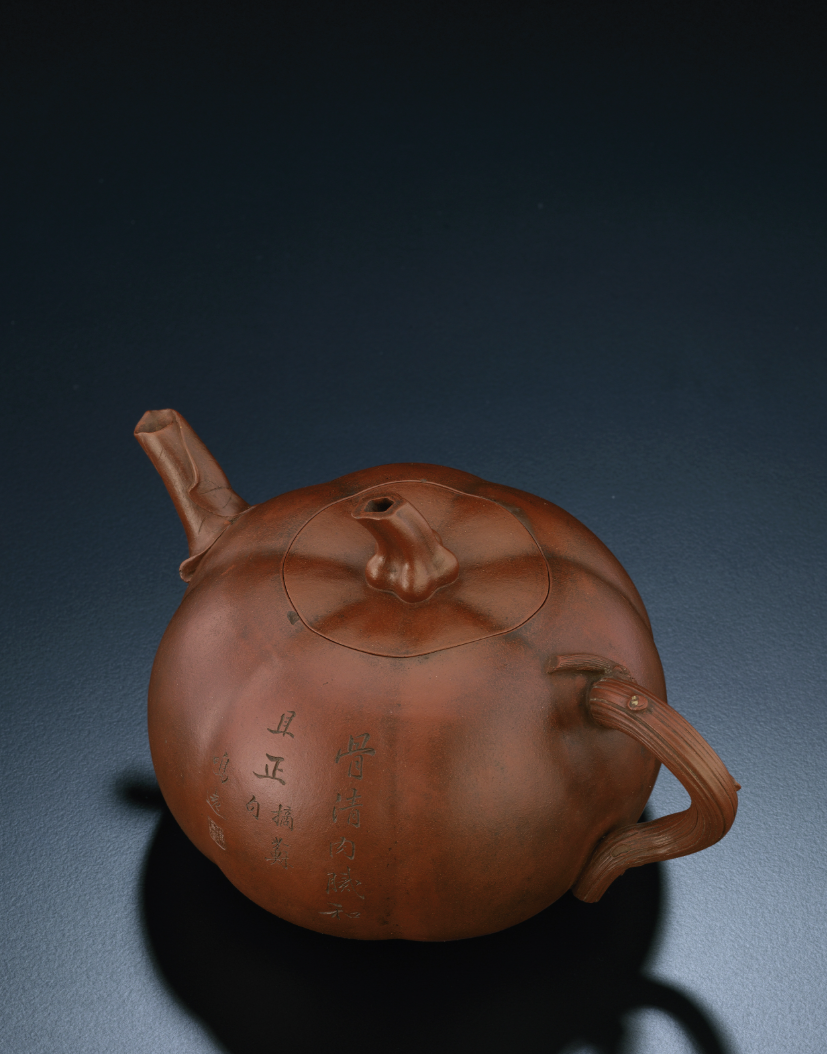
Fig. 5 Kangxi period/Yongzheng, a purple clay Yixing teapot in the shape of a pumpkin, by Chen Mingyuan. Publication: Yixing Ceramics, Dr. K. S. Lo, Hong Kong, 1986, p. 61, ill. XXVIII. Hong Kong Museum of Art, 1989 collection.
Ornamental aesthetics: expression through symbols and allegories The ornament of Chinese tea tableware exported to Russia is mainly represented by traditional benevolent motifs combining calligraphic and picturesque aesthetics with rich cultural overtones [6]. The ornamental compositions of blue and white porcelain include stylized lotus shoots, peonies, dragons, phoenixes, mountain and water landscapes and figurative scenes. The Hermitage's collection contains a "Bowl with the image of the "Immortals" (1662-1722). Its ornament combines mythological characters of ancient China with floral motifs, complemented from the inside by benevolent symbols. The smooth lines and rich composition demonstrate the symmetrical harmony and rhythmic perfection inherent in Chinese traditional ornamentation. (Fig. 6) 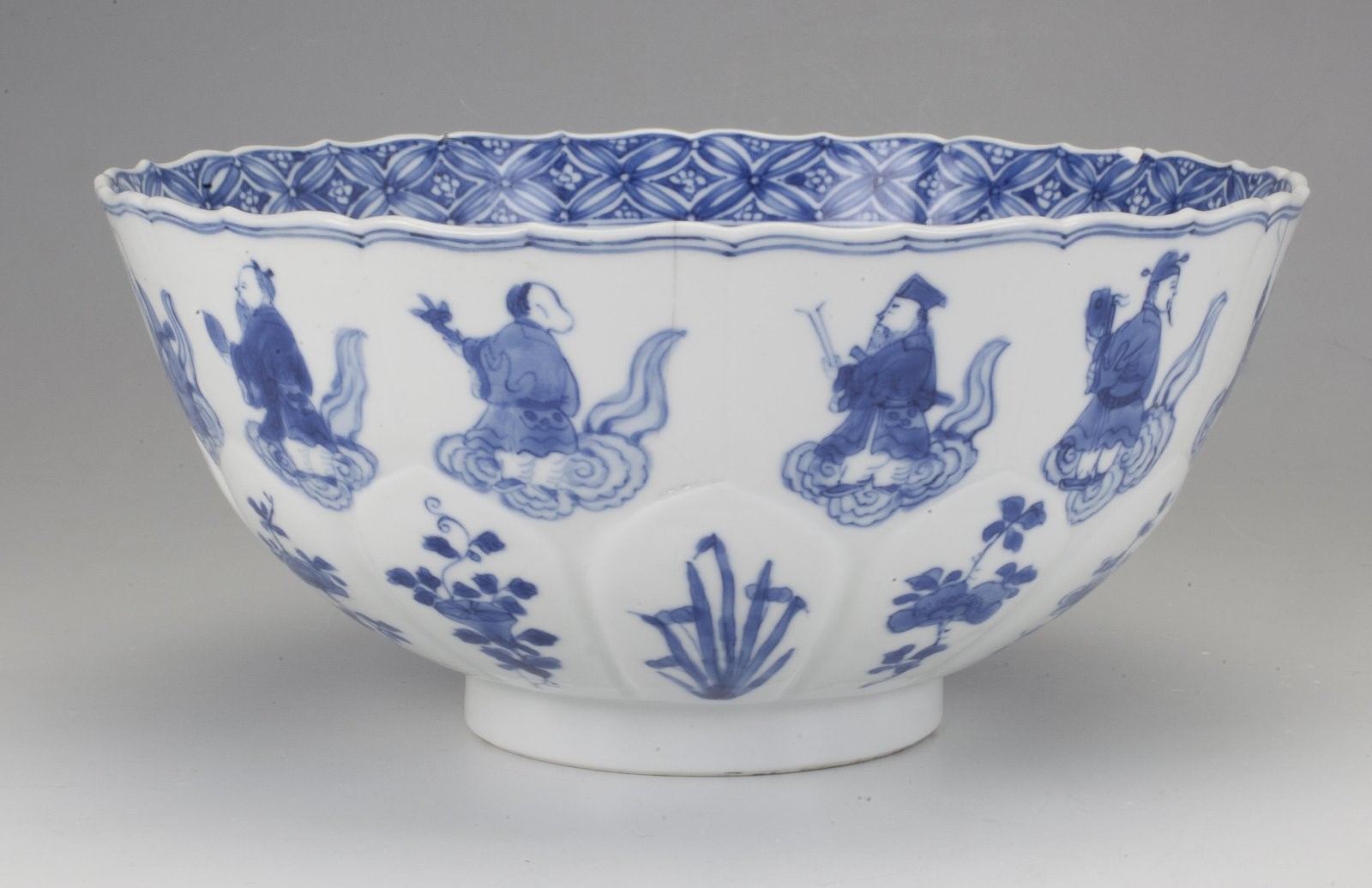
Fig. 6 A bowl with the image of the "Immortals". 1662-1722. 9.6 x 20.6 cm. He entered the Collection of the Imperial Porcelain Factory Museum in 2002. Unlike porcelain analogues, the decorative design of Yixing ceramic tea dishes is characterized by restrained conciseness, with a predominance of engraving techniques and applied relief. The ornamental repertoire includes calligraphic inscriptions, landscape compositions, as well as plant-animalistic motifs ("flowers and birds"). The "Yixing teapot with bamboo knots with the stamp of master Yang Pengnian" ("清乾隆杨彭年款紫砂竹节壶") of the Daoguang period (1820-1850) is indicative in this regard: the vessel body is decorated with an engraved image of bamboo stalks, complemented by a calligraphic inscription, which embodies an organic synthesis of the aesthetic principles of literary scientists and the plastics of tea utensils. Such decoration is not limited to a purely decorative function, but translates the values of traditional Chinese culture, transforming tea utensils into a representative of the cultural paradigm. (Fig. 7) ![23531<sup><a href='#1024'>[1024]</a></sup>](https://e-notabene.ru/generated/78316/index.files/image007__.jpg)
7. Yixing teapot with bamboo knots with the stamp of master Yang Pengnian. (“清乾隆杨杨”) 1835 Height: 9 cm, neck diameter: 7.3 cm, base diameter: 9.9 cm. The collection of the Palace Museum, Beijing.
Thus, the artistic and aesthetic characteristics of Chinese tea tableware exported to Russia represent a concentrated embodiment of the traditional Chinese aesthetic system on a material medium. The style of "refined restraint" not only satisfied the practical needs of the Russian market, but also conveyed the Chinese worldview of naturalism and the ideals of literary scientists in the form of cultural codes. In the process of intercultural communication, these characteristics, while preserving the core of local aesthetics, have gained a new dimension due to Russian perception and creative adaptation, becoming an important medium for the mutual enrichment of Chinese and Russian cultures.
Artistic and aesthetic characteristics of Russian tea tableware of domestic production of the XVIII-XIX centuries Materials and techniques: innovative use of metal and enamel The production of Russian tea tableware of domestic production was based on metalworking techniques combined with enamel art, forming a unique aesthetic of materials. In the 18th and 19th centuries, Russian metal tea tableware was mainly made of copper and silver, with silverware being particularly exquisite [6]. The Gilded silver tea set of the XVIII–XIX centuries, preserved in the State Historical Museum of Russia, including a teapot, cups, teaspoons and a tray, demonstrates the rounded shapes of the surface of the teapot with three supports in the form of stylized animal paws. The handle of the kettle is made of wood to prevent burns during use. The gilding technique gives the silver surface a luxurious golden sheen, reflecting the aesthetic preferences of the Russian aristocracy. (Fig. 8)
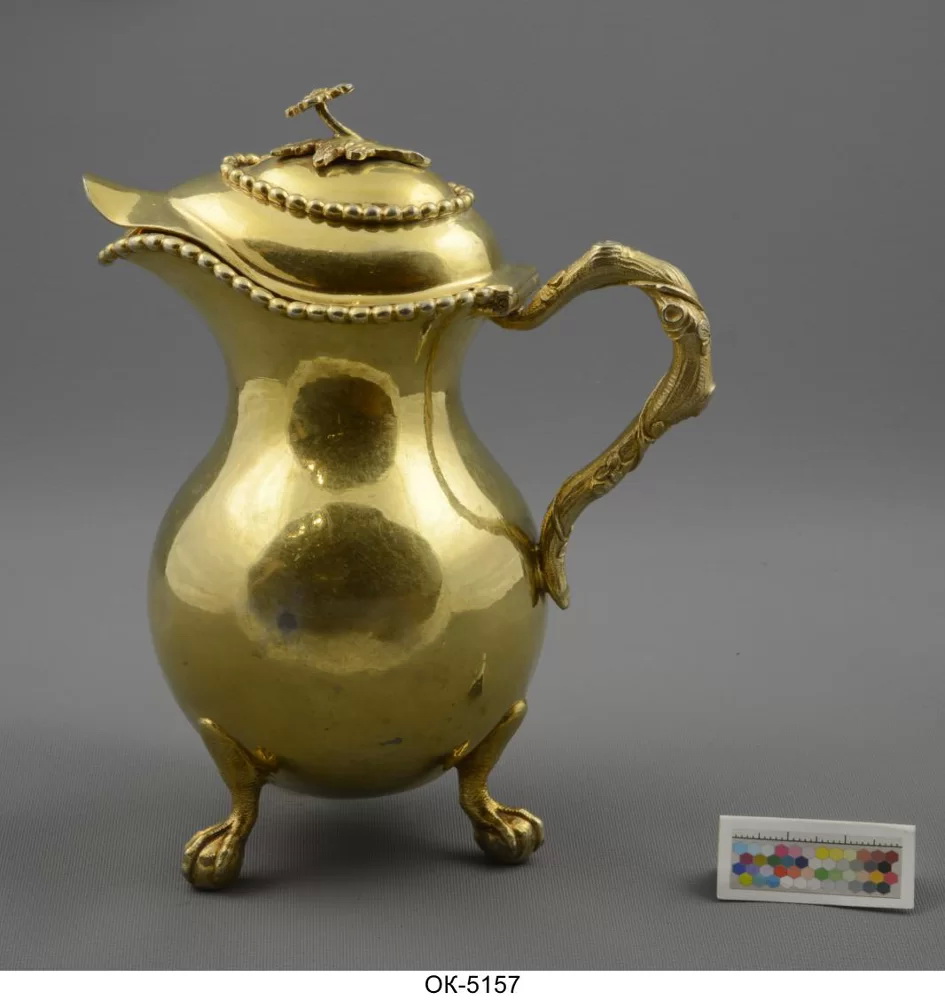
8. Silver gilt milk jug (XVIII century).
Since the middle of the XVIII century, the active development of enameling art began in Russia, the techniques of which began to be used in the production of tea utensils, which led to the formation of a unique category of "enameled tea utensils". Russian enameled tableware was mainly created in two techniques: cloisonne enamel on a copper base and painted enamel [7]. In the first case, thin metal threads were soldered onto the copper base, forming the contour of the pattern, which was then filled with an enamel mass followed by high-temperature firing. In the second case, the patterns were applied directly to the copper base, followed by coating with enamel paints and firing. The tea set with a picturesque copper-based enamel of the 19th century, made on a blue background with images of flowers, birds and landscapes, is distinguished by a bright color palette and rich tonal transitions, demonstrating the highest level of Russian enamel craftsmanship. (Fig. 9) The samovar as a unique national symbol of Russian tea culture appeared in the 18th century. The evolution of materials and technological innovations in the creation of Russian samovars were closely related to the social order, forming an original aesthetic language [8]. The early samovars of the Irginsky plant were made of copper-zinc alloy (brass) by forging and stamping, creating a collapsible structure. After Tula became a leading manufacturing center in the 19th century, craftsmen combined brass with silver, enamel and precious stones, developing a technique of coinage with gold inlay [9]. Plastic aesthetics: monumentality and decorative richness In most cases, Russian tea tableware of domestic production is distinguished by its monumentality and decorative richness, with an emphasis on volume and ornamentation, which is in stark contrast to the conciseness of its Chinese counterparts [9]. Metal tea tableware is most often round or oval in shape, characterized by a massive body, solid spout and handle, reflecting the breadth of the national character. These exquisite tableware not only performed a utilitarian function, but also became an important element of interior decoration. (Fig. 9) 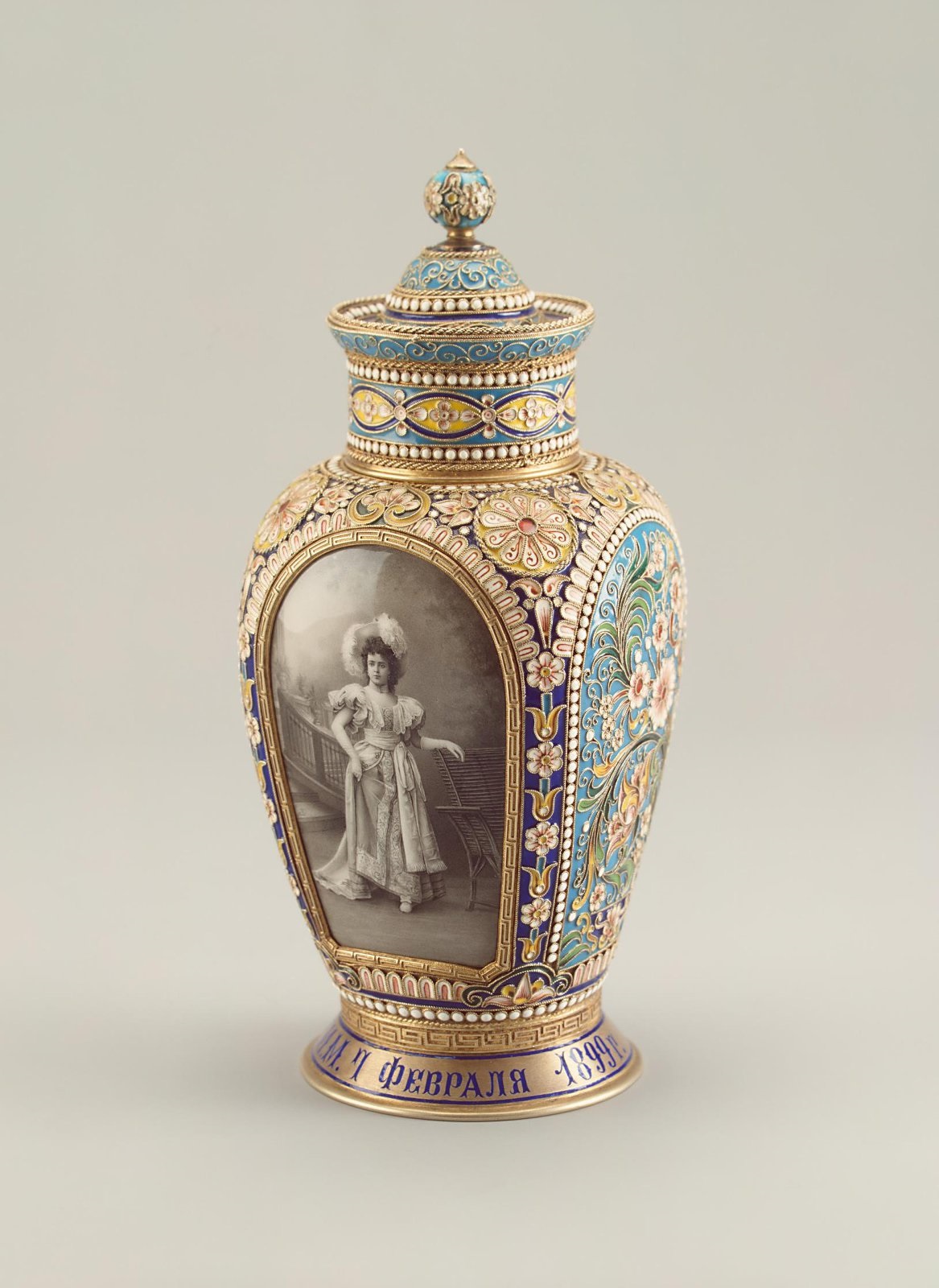
Fig. 9 A teapot with a photograph of an unknown lady and the LRA monogram under a noble crown. 1890s. 21.6x8.6x8.6 cm. He entered in 1951. Transferred from Gokhran. Section of the Hermitage Collection: Russian Art and Culture.
The evolution of the samovar's forms reflects its transformation from a utilitarian object to a cultural symbol. Early pot-shaped samovars of the XVIII century, used for heating the sideboard, with a spherical body and supporting legs, showed structural similarities with the Chinese ho-go. By the end of the 18th century, with the popularization of tea, the samovar acquired canonical outlines — a "cumgan—like" shape with a narrow throat and a high body, while the internal structure was complicated by the addition of a roasting tube and an ash collection tray, and a platform for installing a teapot appeared on top of the device, which formed a two-level "bottom heating - maintenance" system. temperatures from above". (Fig. 10)
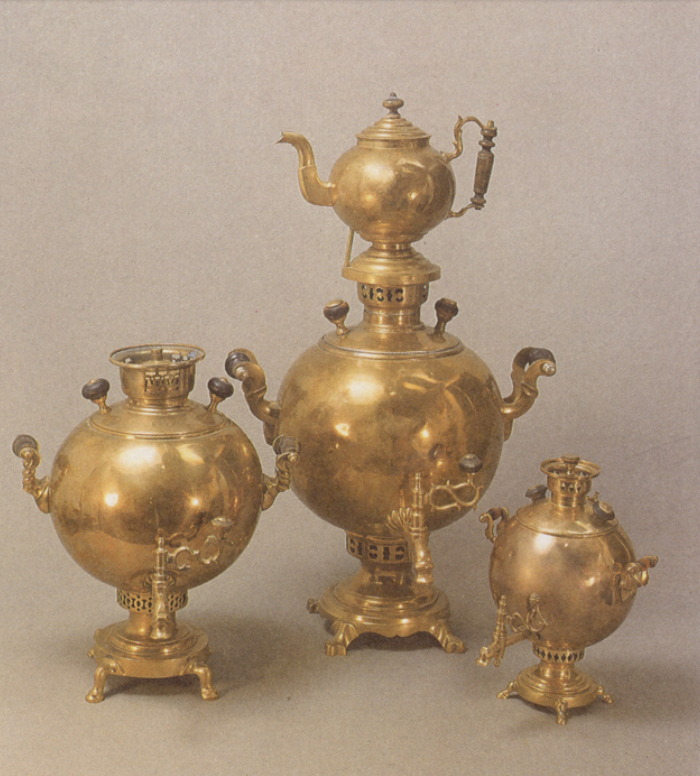
Fig. 10 Samovars and a teapot. The end of the XIX — beginning of the XX century. Russia. Photo source: Gilodo A.A. Russian Samovar. 1991 A.A. Gilodo in his monograph "Russian Samovar" notes that different regions have developed unique shapes: Tula samovars mostly had a pear-shaped or vase-shaped shape with an emphasis on symmetry and roundness; Ural specimens were more often made in a cylindrical shape with laconic decor; while court samovars of St. Petersburg synthesized Rococo style with graceful curves of the body and supports in the form of shells or acanthus tendrils [9]. (Fig. 11) 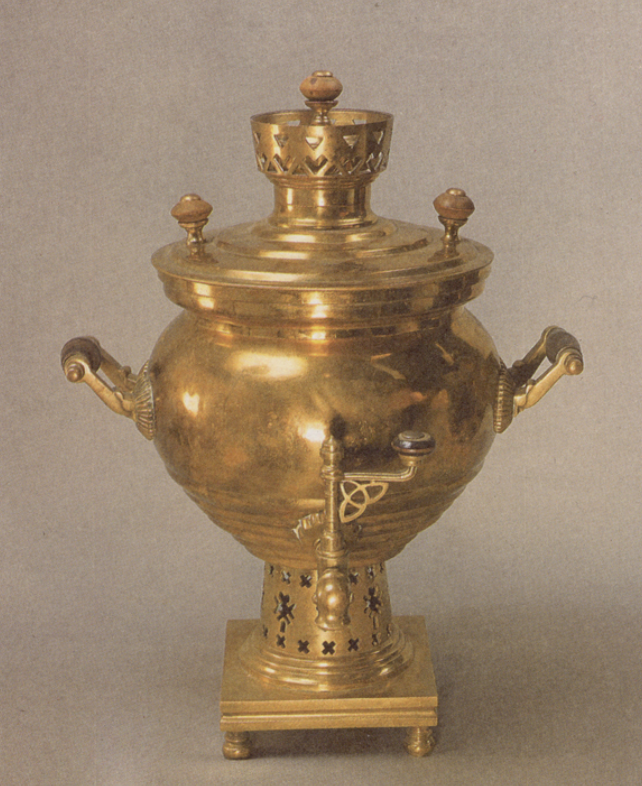 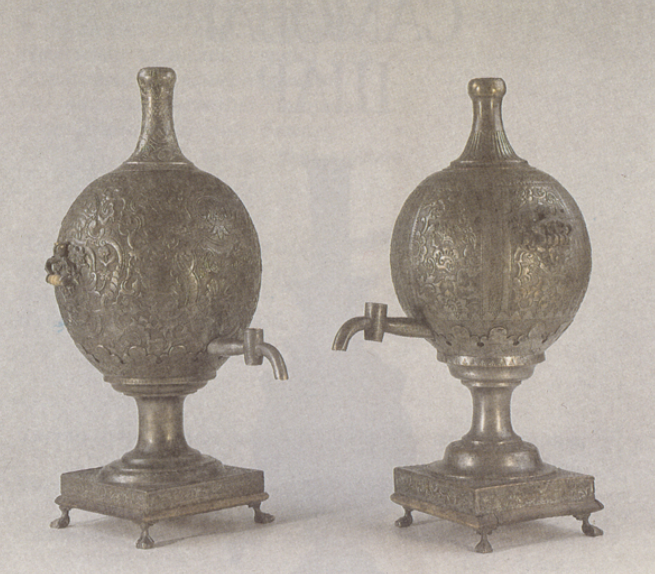
Fig. 11 Samovars from different regions with unique types of shapes (on the left is the hemisphere Samovar. The end of the 19th century. Tula. Factory of N. I. Batashev, on the right - Samovars. The 1760s The Urals. Factories. The Demidovs. The decoration of the body). Photo source: Gilodo A.A. Russian Samovar. 1991
Ornamental aesthetics: synthesis of national cultures Elements of Russian national culture include folklore motifs, natural landscapes, and traditional costumes such as forest animals and ornamental compositions. (Fig. 12) In addition, the ornament of Russian tea dishes borrowed Chinese decorative elements - stylized lotus shoots and peony motifs, but their artistic interpretation was characterized by a more expressive interpretation with thickened contours and an intense color palette. 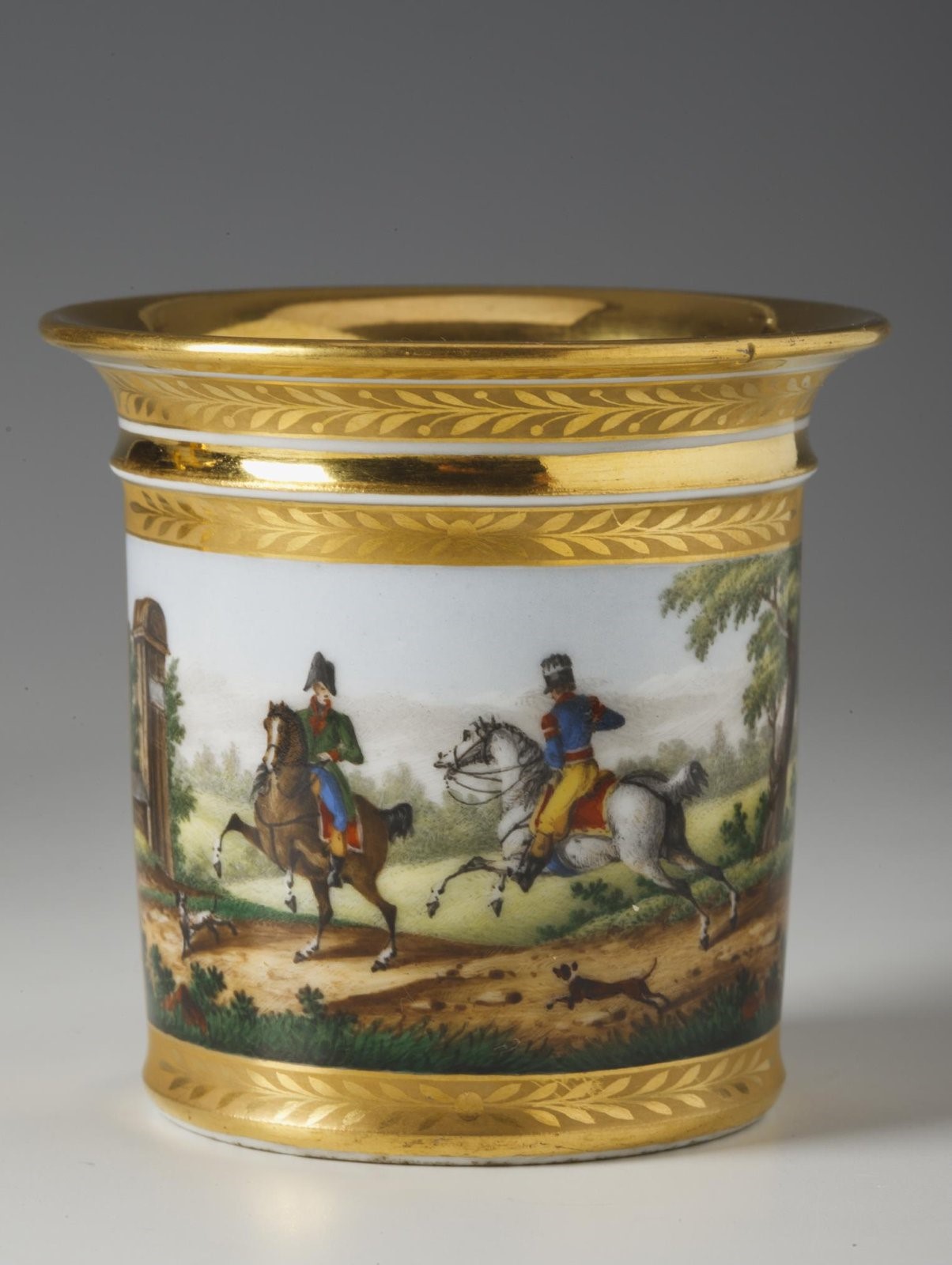
Fig. 12 Cup and saucer with the image of two horsemen. 1815-1820. a) 6.7 x 8.2 x 7.3 cm; b) 2.6 x 13.3 cm. Section of the Hermitage Collection: Russian Art and Culture. The samovar ornament is a microcosm of Russian art history, synthesizing folklore motifs, religious images and borrowed styles. In the first half of the 19th century, under the influence of Rococo aesthetics, the surfaces of samovars were often decorated with acanthus curls and shell motifs, reflecting the influence of European court art and crystallizing the unique "Russian style" [10]. Thus, the artistic aesthetics of Russian tea tableware of domestic production is a concentrated embodiment of national technologies, the character of the people and aesthetic preferences. Her style of "solemn monumentality" not only stands in stark contrast to her Chinese counterparts, but also forms a complementary pair with them.
The mutual influence of the artistic aesthetics of Chinese and Russian tea ware in the context of intercultural dialogue The influence of Chinese tea ware on the Russian tradition. Borrowing plastic and ornamental solutions The conciseness of the forms and the benevolent ornamentation of Chinese tea tableware had a significant artistic and aesthetic impact on Russian national traditions. In the middle of the 18th century, the St. Petersburg Porcelain Manufactory began to produce imitations of Jingdezhen blue-and-white porcelain, where plastic solutions of Chinese samples were borrowed — round and square outlines, a proportional ratio of the spout and handle, while maintaining an almost identical compositional structure with the original, but with slightly enlarged dimensions [6]. In the ornamental design, Russian tea tableware has widely borrowed Chinese motifs such as stylized lotus shoots, peonies, dragons and phoenixes, but their artistic embodiment has acquired a nationally distinctive interpretation. A typical example is the lotus images on Russian tea sets, characterized by exaggerated splendor, bold lines and intense colors, which is in stark contrast to the refined restraint of Chinese lotus ornaments. (Fig. 13) 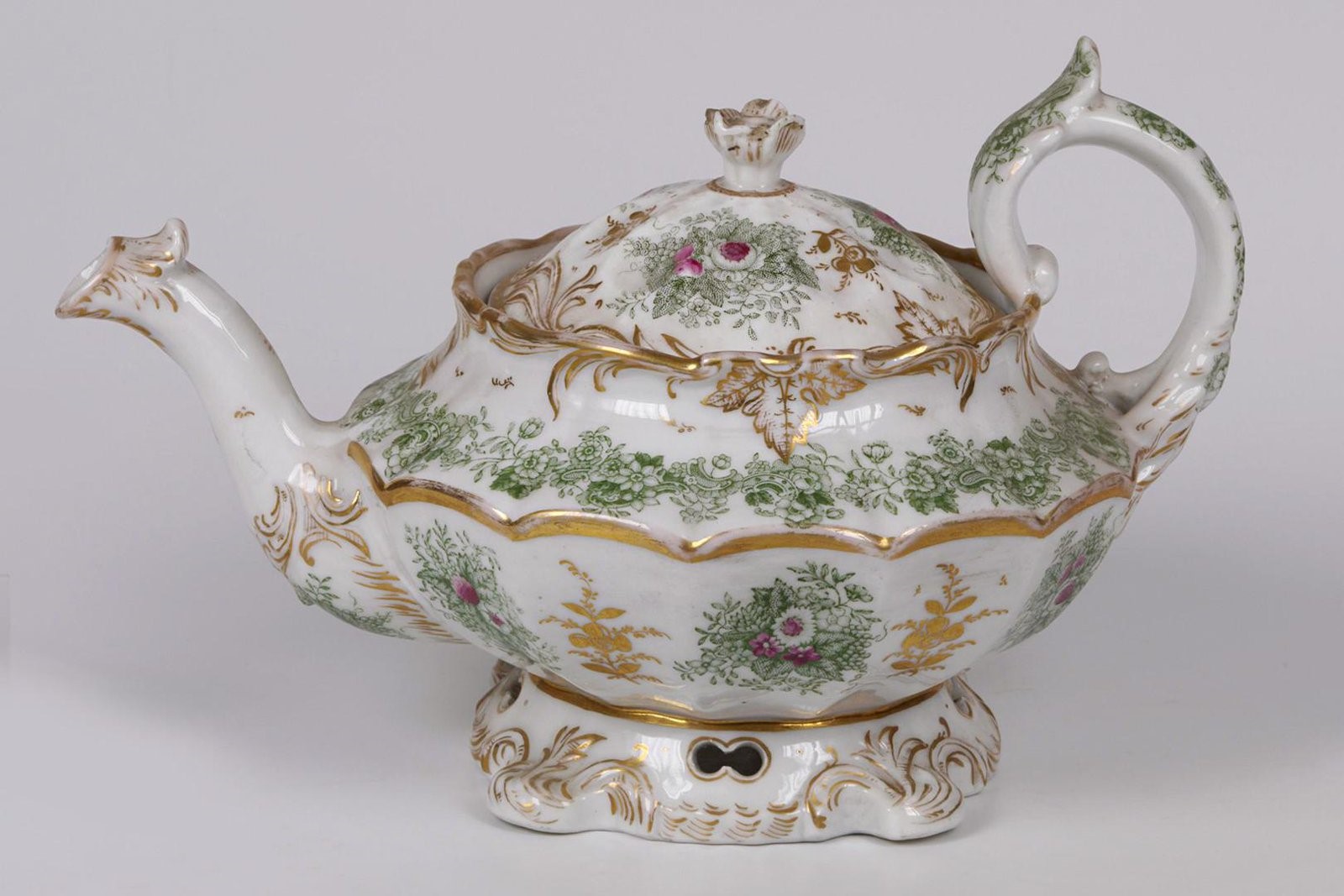
Fig. 13 A teapot with a lid, with a green printed pattern. mid-19th century. 15.5x25x17 cm (a); 4.5x10.5x10.5 cm (b). Section of the Hermitage collection: Russian Art and culture.
Dissemination of craft skills and technologies Chinese porcelain production technologies and methods of creating Yixing ceramics, which penetrated into Russia through trade and cultural channels, had a significant impact on the development of local tea tableware production. In the 18th century, Russian craftsmen began to master Chinese porcelain production methods, establishing porcelain manufactories in St. Petersburg, Moscow and other cities, where they launched the production of blue and white porcelain tableware [11]. Although the formulations of porcelain pulp and glaze in Russian manufactories differed from those in Jingdezhen, the technological processes of molding and firing generally reproduced Chinese techniques. In addition, the technology of Yixing ceramics has also penetrated into Russia, where local craftsmen began experimenting with creating tea utensils in the style of zini from domestic pottery clay. Although Russian clay was inferior in texture and porosity to Yixing clay, the concepts of Chinese ceramics were creatively reworked in plastic and decorative solutions, which led to the formation of an original tradition of clay tea utensils with national specifics. Individual copies of such products even joined the court collections [12].
The influence of Russian tea ware on the Chinese tradition. Innovations in materials and technologies Russian metalworking techniques and enamel art, having penetrated into China, contributed to the innovative development in the field of materials, technologies and decorative solutions for the creation of local tea tableware. Russian Russian Kyakhta technique (also known as "Russian firing enamel"), based on the combination of silver base with enamel, is characterized by the synthesis of silver technique with painting, the use of both transparent and opaque glazes, as well as inlaid with precious stones. This technology entered China through cross-border trade at the end of the 19th century, and craftsmen from Beijing, Shanghai and other cities integrated it with traditional Chinese techniques of filigree and cloisonne enamel, creating unique tea utensils in the "Kyakhta" style [13]. In addition, the high saturation of the color palette of Russian enamel pigments (such as cobalt blue and carmine red) and the technology of multilayer firing influenced the Chinese enamel "guangcai" (“Guangcai"). When reproducing European enamel products during the Qing Dynasty, Guangzhou craftsmen adapted the formulation of vitreous enamel glazes of the Russian tradition, which gave the glazed surface of guangcai porcelain a special transparency and luster. [14] A striking example is the Guangzhou Museum's "guangcai" dish with a floral ornament medallion, where a blooming branch of a peony is depicted in the medallion against a pink-red lacquer background, and the construction of color layers demonstrates technical commonality with the Russian enamel technique of "layering transparent glazes." (“广彩花花”) (Fig. 14) 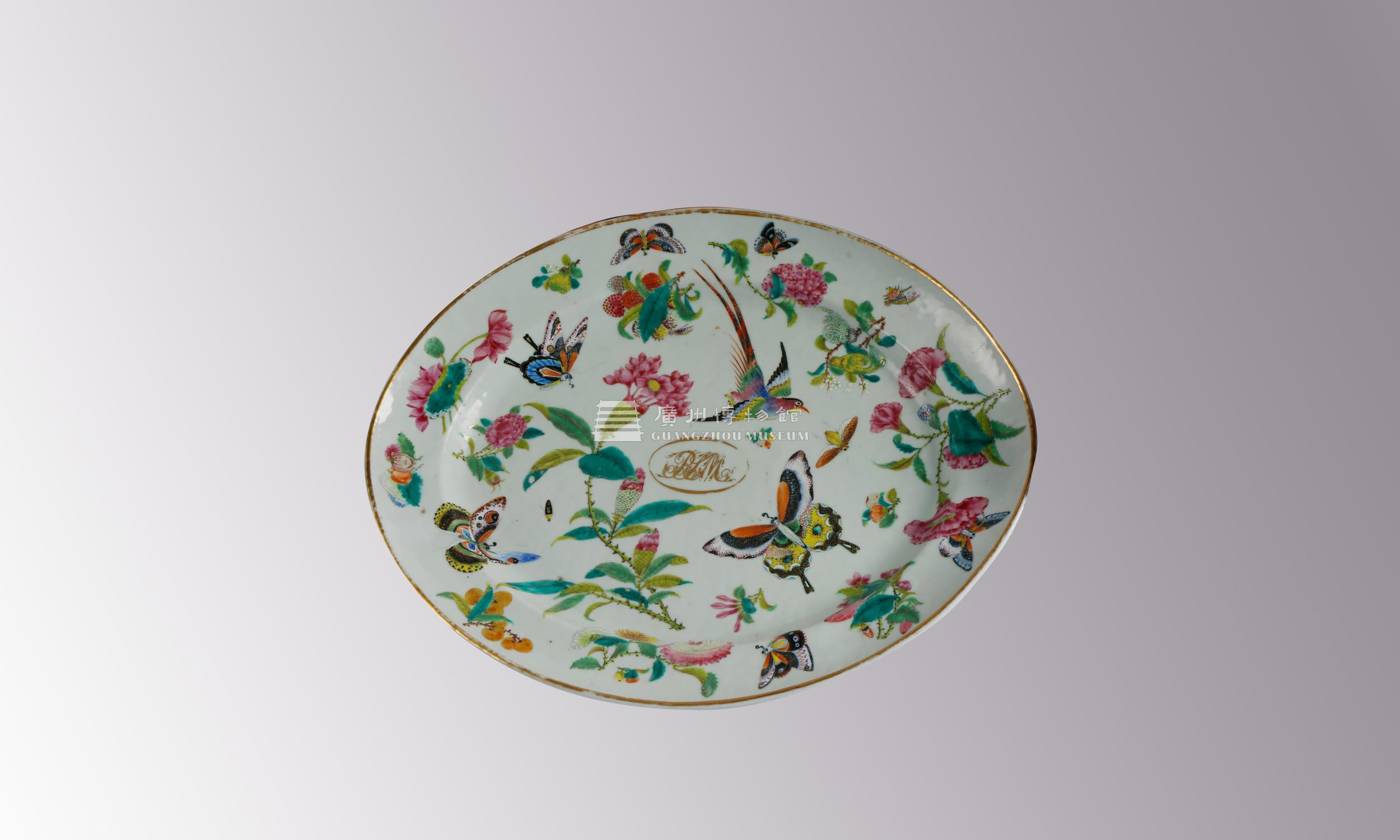
14 Oval dish "Guangcai" with an ornament in the form of birds, flowers and heraldic motifs. (“广彩花鸟徽章纹椭圆形盘”) XIX century . Guangzhou Museum Collection.
Synthesis of decorative styles The monumentality and decorative richness of Russian tea ware had a definite influence on the stylistics of the forms of Chinese traditional utensils. The combination of acanthus patterns and geometric ornaments typical of Russian decor with traditional Chinese benevolent motifs created a new artistic language. In addition, compositions appeared in Guangcai porcelain combining Western subjects with Chinese images of flowers and birds, which not only met the aesthetic needs of the European market, but also contained the traditional Chinese benevolent implication of wishes for wealth and prosperity [14]. (Fig. 15) 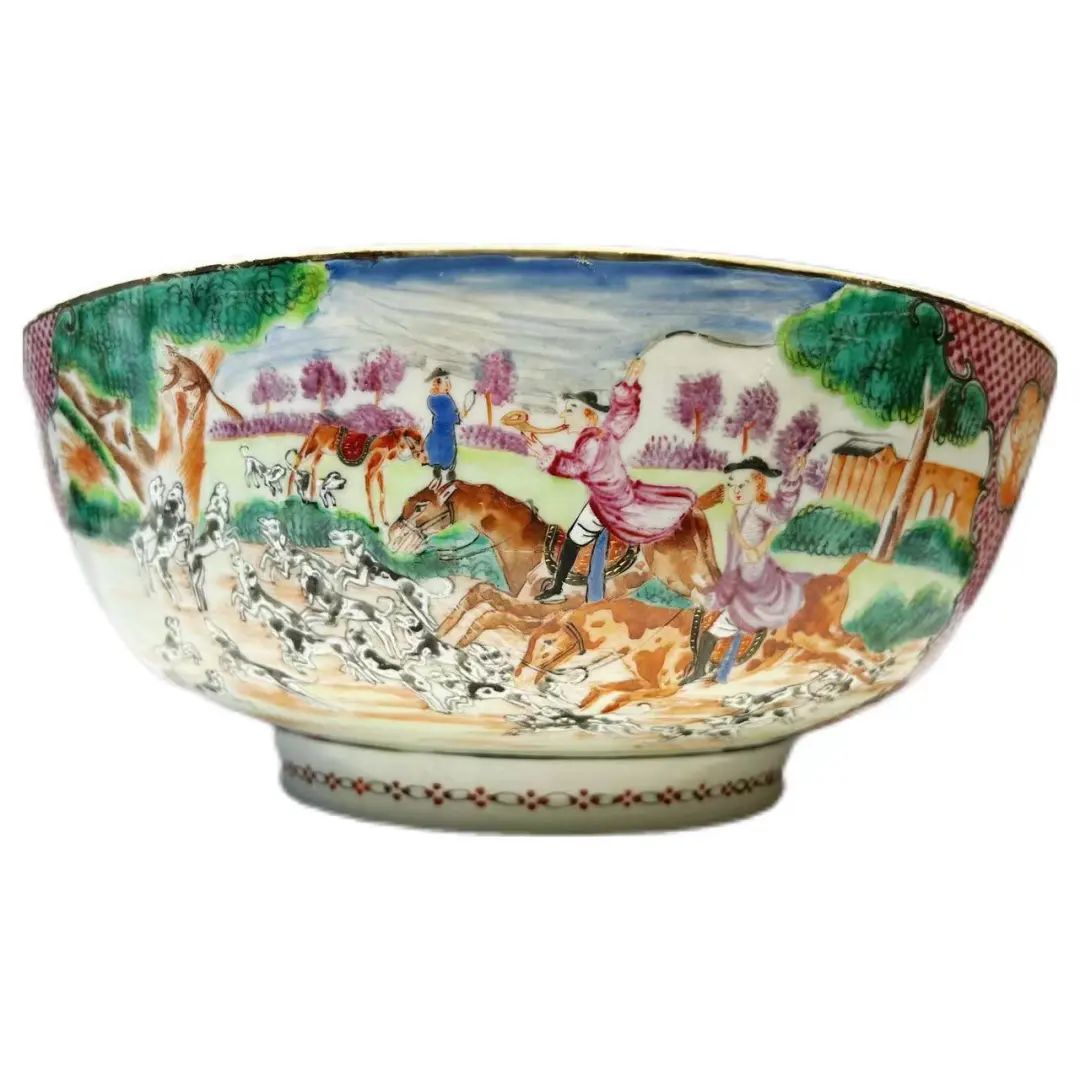
Fig. 15 The cup "Guangcai" with story compositions from the life of Europeans. (1736-1795). Bowl diameter: 29.3 cm Height: 11.8 cm Collection of the Jingdezhen Export Porcelain Museum.
Coloristic resonance: mutual echoes in the aesthetics of color
The blue tonality of Gzhel ceramics with its characteristic grayish undertone enters into an intercultural aesthetic dialogue with the rich indigo of Chinese blue-white porcelain, creating a subtle coloristic correspondence [15]. (Fig. 16) 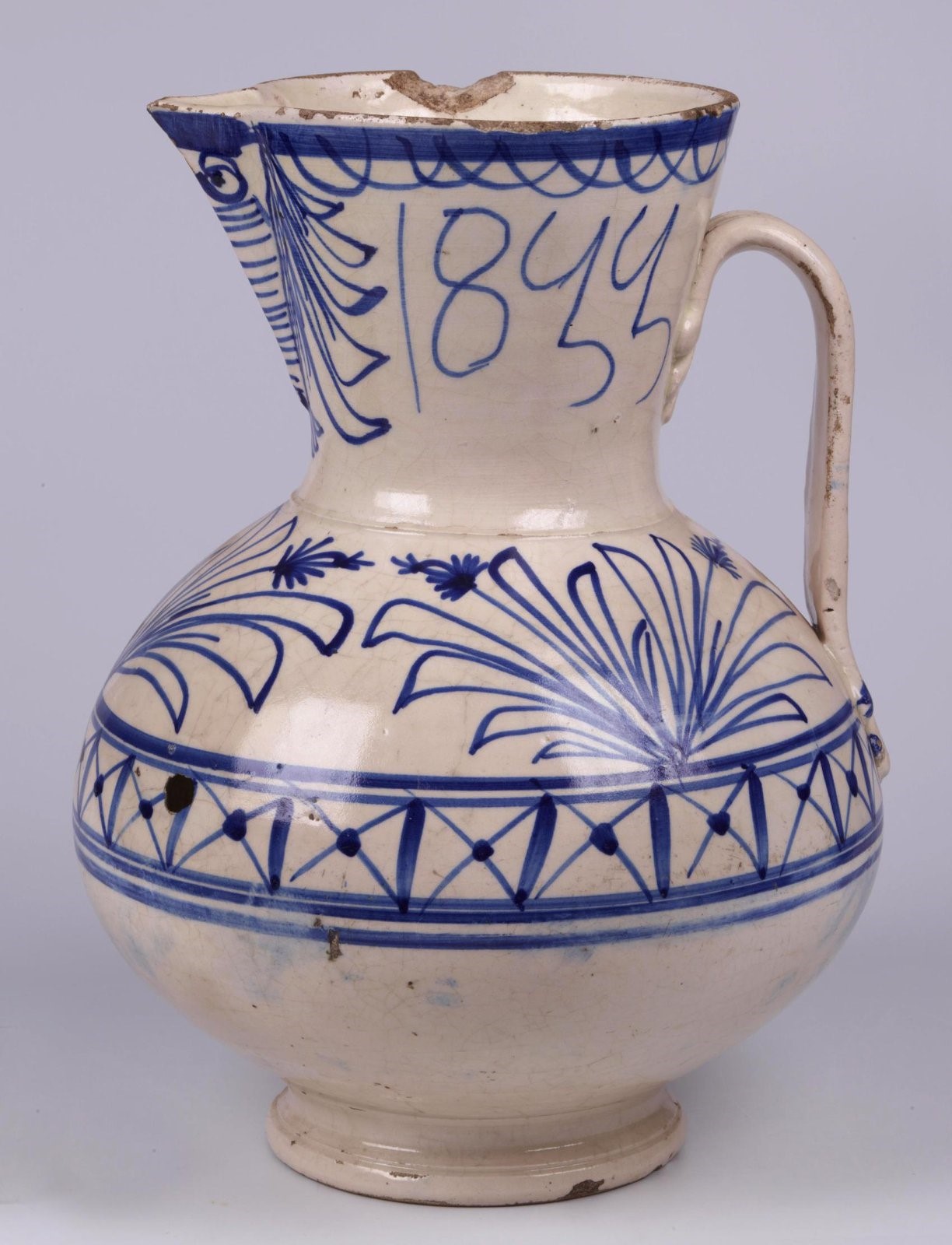
16 A jug with a blue stylized floral painting and an inscription on the neck: "1833." 1833 17.6x20.3x20.3 cm. Section of the Hermitage Collection: Russian Art and Culture.
Thus, despite the partial influence of Russian techniques on Chinese tea ware, the dominant role of the local cultural tradition remained unchanged. For example, Isin ceramics retained its aesthetic basis — the natural texture of the surface without glaze coating, only occasionally complementing accessories (such as lids and handles) with elements of Russian gilding technique. Although Guangcai porcelain borrowed enamel pigments, its rich composition and benevolent symbolism remained a continuation of traditional Chinese culture. Such a "selective adaptation" demonstrates the ability of Chinese artists to transform creatively in the context of intercultural dialogue.
Conclusion Artistic and aesthetic exchange and synthesis of Chinese and Russian tea ware in the XVIII-XIX centuries formed an important part of the material and cultural dialogue between the two countries, reflecting the processes of mutual enrichment and joint development of various cultural traditions. Chinese export tableware, represented mainly by porcelain and Yixing ceramics, was distinguished by laconic restraint of forms and semantically rich ornamentation, embodying the idea of the harmonious unity of the human spirit and the natural principle. Russian Russian-made tea utensils, which were mainly made of metals and enamels, demonstrated their monumentality and decorative richness, and their ornamental solutions, which synthesized elements of various cultures, vividly reflected the breadth of the national character and aesthetic preferences of the Russian people. In the context of intercultural dialogue, plastic solutions, ornamentation and techniques of Chinese tea ware had a profound impact on the Russian tradition, contributing to the development of local tea ware art. In turn, the materials, technological techniques and decorative principles of Russian tableware have defined new vectors for the Chinese tradition, opening up prospects for artistic innovation. This mutual creative dialogue formed a unique style synthesizing Chinese and Western elements, which enriched the artistic systems of tea utensils of both countries. In the context of globalization, intercultural artistic contacts are becoming more intense. The key task of modern design is to preserve national cultural identity while creatively mastering foreign influences. First, one should adhere to the logic of interaction of "bilateral mutual enrichment". The history of the artistic exchange of tea tableware in the context of the "Great Tea Way" clearly demonstrates that successful intercultural design is based not on unilateral cultural expansion or mechanical copying, but on mutual creative development born in the space of an equal dialogue. Secondly, it is necessary to promote the "flexible transformation" of traditional techniques. In the process of artistic and aesthetic exchange of Chinese and Russian tea utensils, the craftsmen of both countries adapted the borrowed technologies in accordance with local traditions. This transformation path based on the principle of "traditional techniques + local needs" has significant methodological value. Thirdly, it is important to form a "material medium + cultural narrative" translation model. Tea tableware of the XVIII-XIX centuries acted not only as a utilitarian object, but also as a representative of cultural codes, where ornament and plastic conveyed aesthetic ideals and value orientations of both countries.
The article is published in the version approved by the reviewers (after receiving a positive review recommending the manuscript for publication) with corrections made by the author (after receiving the editor’s comments, if any).
Read all reviews on this article
References
1. Sokolova, I.A. (2012). Tea and tea trade in Russia: 1790–1919. Moscow: Sputnik + Publishing House.
2. Mi, C. (2003). Sino-Russian border trade in Kyakhta during the Qing dynasty. Nankai: Nankai University Press.
3. Dyu, L. (2023). Russian students of the 18th century in China and the spread of Chinese porcelain in Russia. Russian Studies Journal, 13(02), 24-36.
4. Tsai, D. (2024). Analysis of ceramic tea service design from the Qing dynasty in Jingdezhen. Jingdezhen Ceramics, 52(01), 62-69.
5. Wang, L. (2019). Tea culture and ceramic tea utensils. Research on Ancient Ceramics, 1-7.
6. Dyu, L. (2022). Study of material cultural exchange between the Qing dynasty courts and Russia. Moscow: Cultural Relics Publishing House.
7. Le, T. (2009). Comparative study of Sino-Russian tea culture. Culture Journal, 4, 88-91.
8. Li, T. (2021). Artistic uniqueness of export teapots from the Ming and Qing dynasties (1368–1912). Decorative Arts and Spatial Environment, Bulletin of the Russian State University of Arts, 210-220.
9. Gilodo, A.A. (1991). Russian Samovar. Moscow: Soviet Russia.
10. Borisova, O.N. (2009). Samovar as an object of decorative applied art. Humanitarian Studies in Eastern Siberia and the Far East, 2, 1-3.
11. Wang, Y. (2015). Brief discussion on tea ware culture in China and Russia. Science and Technology Horizon, 24, 163.
12. Li, S. (2018). Aesthetics and culture of ancient Chinese ceramic tea ware. Fujian Tea, 162.
13. Zhang, M. (2017). Study of localization and innovations in the craft art of "Kyakhta". Design, 05, 36-37.
14. Wang, Y. (2025). Study of the evolution of figurative decorative motifs in Guangcai porcelain of the Qing dynasty. Cultural Monthly, 04, 183-185.
15. Istomina, E.G. (2013). Gzhel ceramics (on the history of the craft). Cultural Heritage of Russia, 1, 18-21.
Peer Review
Peer reviewers' evaluations remain confidential and are not disclosed to the public. Only external reviews, authorized for publication by the article's author(s), are made public. Typically, these final reviews are conducted after the manuscript's revision. Adhering to our double-blind review policy, the reviewer's identity is kept confidential.
The list of publisher reviewers can be found here.
The subject of the article is a comparative study of the aesthetics of Chinese and Russian tea tableware of the XVIII-XIX centuries. The artistic aesthetics of tea tableware in China and Russia of the XVIII–XIX centuries (porcelain, Yixing ceramics, metal and enamel utensils, samovars). Tea tableware is considered not only as a utilitarian object, but also as a translator of cultural codes and aesthetic ideals. The author analyzes the processes of mutual influence, borrowing and synthesis of forms, ornaments and technologies in the context of intercultural communication of the Great Tea Way. The author demonstrates an interdisciplinary approach, combining historical and artifact analysis (the study of specific museum objects from the collections of the Hermitage, the Palace Museum (Forbidden City), the National Museum of China, etc.); comparative art historical analysis (identification of similarities and differences in the shaping, decoration and coloristics of Chinese and Russian traditions); iconographic method (interpretation of cultural symbols ornaments – benevolent motifs, lotus, acanthus); technological analysis (study of the influence of the exchange of techniques – gilding, enamel, porcelain production) on the evolution of styles. The methodological framework makes it possible to identify the deep mechanisms of cultural synthesis. The relevance of the work is argued by the author at the level of the academic context: there are not enough works devoted specifically to the dialogue of artistic forms on the material of tea utensils, there are very few existing studies often consider Chinese and Russian tea cultures in isolation or focus on the economics of trade; and the practical context: in the era of globalization and growing interest in Russian-Chinese cooperation, understanding the mechanisms of historical cultural synthesis is in demand both in the field of design and in museum and exhibition activities. Russian Russian art is considered as a full—fledged bilateral dialogue ("China – Russia"), the author proves the existence of a reverse influence (Russian techniques on the Chinese tradition), introducing the concept of "selective adaptation"; the introduction of a new terminological apparatus is the use of the term "Kyakhta" to describe the synthesis of Russian enamel techniques. and Chinese filigree applied to tea utensils, which expands the conceptual framework of art criticism; the work shows in detail exactly how the borrowing took place. Russian Russian craftsmen, for example, copied the shapes of Chinese porcelain, but changed the scale and color saturation, while Chinese Guangzhou craftsmen borrowed Russian enamel pigments, while maintaining the traditional compositional structure. The style of the work is written in scientific language, the text is full of professional terminology, but it remains readable. The structure is logical. The article consistently reveals the content from historical background and channels of exchange to the analysis of the Chinese tradition, then the Russian, and concludes with a chapter on mutual influence. The content enhances the richness of the visual range and the analysis of specific artifacts (Chen Mingyuan's teapot, Batashev's samovars, a teapot with the painting "Making tea in the rain", etc.). Each thesis is supported by a reference to a museum object, which gives the study evidentiary power. The bibliography includes both fundamental works on the history of porcelain and ceramics, as well as modern research. Both Russian and Chinese sources were used, as well as museum catalogs (the Hermitage, the Palace Museum), which demonstrates the author's deep immersion in the topic. The author correctly appeals to the positions of researchers who focus on either the Russian or Chinese traditions, or on trade and economic aspects. The work is positioned as filling the gap of an interdisciplinary and bicultural approach. As a recommendation: 1. The chronological framework of the study is stated (XVIII–XIX centuries), but they are not always consistent in the text. There is a mixture of examples from different eras without a sufficient explanation of the evolution of style within the period itself. For example, I would like to find an answer to the question: how did the Russian perception of Chinese porcelain change from the Peter the Great era to the Nicholas era? 2. The introduction of the term "Kyakhta" to denote the synthesis style requires a clearer definition. Is this an established art criticism term or an author's innovation? To clarify and justify the term "Kyakhta style", or to give it a more detailed definition in the text or a footnote in order to avoid confusion with the well-known concept of "Kyakhta tea" or "Kyakhta trade". The presented work is a serious, original and relevant research that contributes to art criticism and the history of material culture of Russian-Chinese relations. The author successfully solves the problem of systematizing aesthetic exchange and offers a convincing model of a two-way dialogue based on rich artifact material.The article is worthy of publication in a relevant scientific journal.
|





 © 1998 – 2026 Nota Bene. Publishing Technologies. NB-Media Ltd.


